


Overview
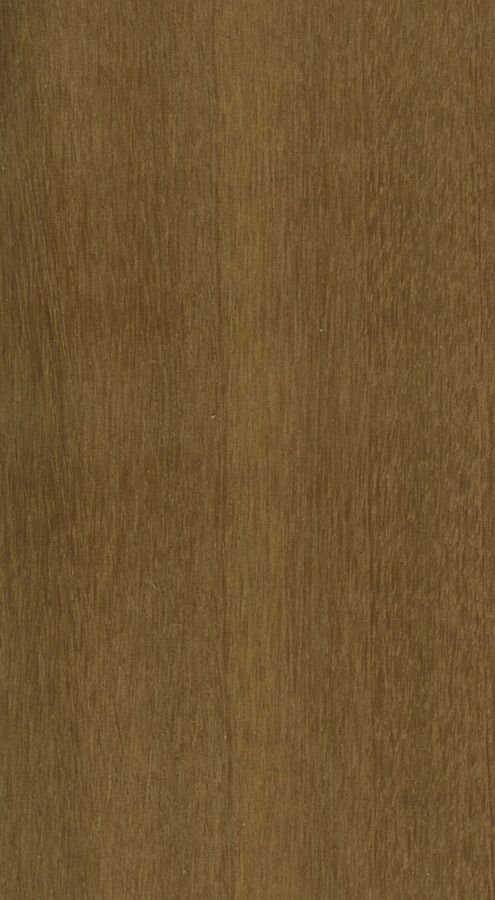
Sapele (Entandrophragma cylindricum) is a golden to dark reddish-brown wood with a ribbon stripe on quartersawn boards, and sometimes pommele, quilted or other figure. It is a common mahogany substitute at a fair price. It is also known as sapelli or sapele mahogany.
Pros
- Ribbon pattern on quartersawn boards, with a variety of other figures.
- Harder than African mahogany (Janka 1,360 lbf, about 665 kg/m3).
- Turns, glues and finishes well, and has only a slight blunting effect on cutters.
- Moderate durability, ranging from moderately durable to very durable.
- About $10 to $12 a board foot at two retailers.
Cons
- Interlocked grain tears out in planing and routing.
- Reacts with iron, becoming stained.
- Reported as a skin and respiratory irritant.
- Moderate insect and borer resistance only.
- Not a true mahogany, and the IUCN Red List has it as Vulnerable.
Variants and subspecies
- Entandrophragma cylindricum: the single commercial species.
- Figured sapele: pommele, quilted, mottled, wavy and beeswing, per Wood Database; priced above plain stock.
- Look-alikes: Sipo (utile) is its plainer cousin; African mahogany (khaya) is lighter; Honduran mahogany is the genuine mahogany.
Working and finishing
Take light passes and use sharp knives; a card scraper cleans up tear-out. Keep steel wool and iron fasteners away. It glues and finishes well, and responds to oil or clear lacquer.
Staining and finishing colour
Colour deepens with age. It stains acceptably, but the figure is the draw, so most finishes are clear. Pore fill gives a smooth film finish.
Sustainability and handling
CITES: not listed (Wood Database; APHIS CITES Timber Species Manual, checked 2026-09-30). IUCN: Vulnerable, from a population reduction of over 20% over three generations driven by range decline and exploitation (Wood Database). FSC availability is not verified here. The US Lacey Act makes it unlawful to trade wood taken or exported in breach of the source country's laws (fws.gov/law/lacey-act), so buy from dealers who can name the country and species. If a piece will be exported to or sold in the EU, Regulation (EU) 2023/1115 (the EUDR) requires due-diligence evidence that wood products are deforestation-free and legally produced; check its current application date with your buyer.
Ethical call: a common and reasonable choice with a named source; the Vulnerable status matters. Health: reported as a skin and respiratory irritant. The US National Cancer Institute reports strong, consistent associations between wood-dust exposure and cancers of the nasal cavity and sinuses, so use extraction and a respirator when sanding.
Popular projects
Furniture, cabinets, doors, guitar sides and backs, flooring, interior trim and veneered panels.
Buying notes
Sold as lumber and veneer. Two retailers list 4/4 at $10.00 and $11.99 per board foot, both quartersawn (September 2026). Prices rise for figured boards.
Typical projects
- furniture
- cabinetry
- doors and windows
- guitars
- flooring
- veneer
Sources
Researched 2026-09-30. Prices, conservation status and CITES listings on this page are indicative and were checked on that date. They change: confirm them with your supplier, and with the relevant authority before importing or exporting.