


Overview
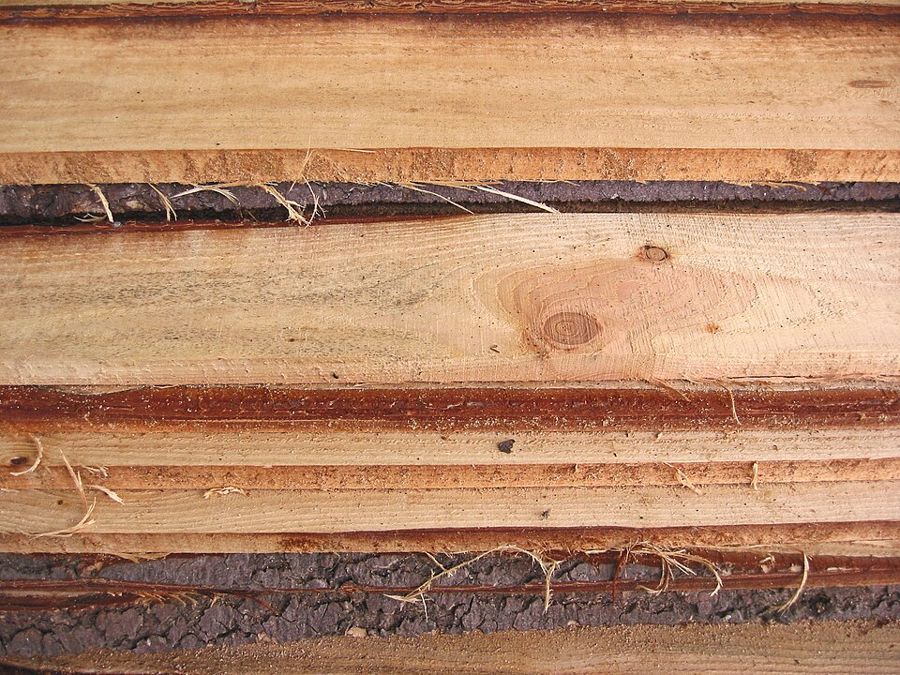
The pine of northern Europe: reddish heartwood, pale sapwood and a fine, even texture, especially from slow-growing northern trees. In the UK and Europe it is traded as "redwood" or "red deal" and is the standard softwood for joinery, floorboards and furniture. It is harder and finer than most North American pines.
Pros
- Easy to work with hand and machine tools; glues and finishes well (Wood Database).
- Warm, reddish colour and good figure; slower-grown trees are dense and fine.
- Moderately durable at best; readily treated with preservative.
- Long tradition in joinery and furniture.
Cons
- Resinous knots bleed through paint.
- Quality varies a lot with growth rate and provenance.
- Heartwood is moderately durable to non-durable (Wood Database), so it needs care outdoors.
- Rarely stocked in North America; import prices are higher than domestic pine.
Variants and subspecies
- The Wood Database notes density varies across its huge range; slower-growth northern trees are denser and finer.
- In Europe sold as redwood (red deal) and whitewood (spruce; see Norway spruce).
- Also planted in New Zealand and parts of North America (Wood Database).
Working and finishing
Machines and planes easily. Slow-grown boards are lovely under a plane; faster-grown boards can fuzz. Knots are hard and resinous, so seal them. Glues well.
Staining and finishing colour
Takes stain with some blotching, as do all pines; conditioner, gel or dye and clear wax or oil give good results. It ages to a warm orange-red, and the figure is attractive under oil.
Sustainability and handling
Not CITES-listed (Wood Database; checked 2026-09-30); IUCN Least Concern as of 2026-09-30. The Wood Database notes allergic skin reactions and asthma-like symptoms reported from pine.
Popular projects
Joinery, doors and windows, floorboards, panelling, and traditional furniture and timber framing.
Buying notes
In the UK and Europe sold as redwood in sawn or planed sections. The Hearne Hardwoods price list showed European pine 4/4 to 12/4 flitch at $6-12 per bf (accessed 2026-09), a premium import price. Slow-grown, tight-ringed boards cost more.
Typical projects
- joinery and furniture
- doors and windows
- flooring
- panelling
- timber frames
Finishes that suit this
More pictures

Sources
Researched 2026-09-30. Prices, conservation status and CITES listings on this page are indicative and were checked on that date. They change: confirm them with your supplier, and with the relevant authority before importing or exporting.