


Overview
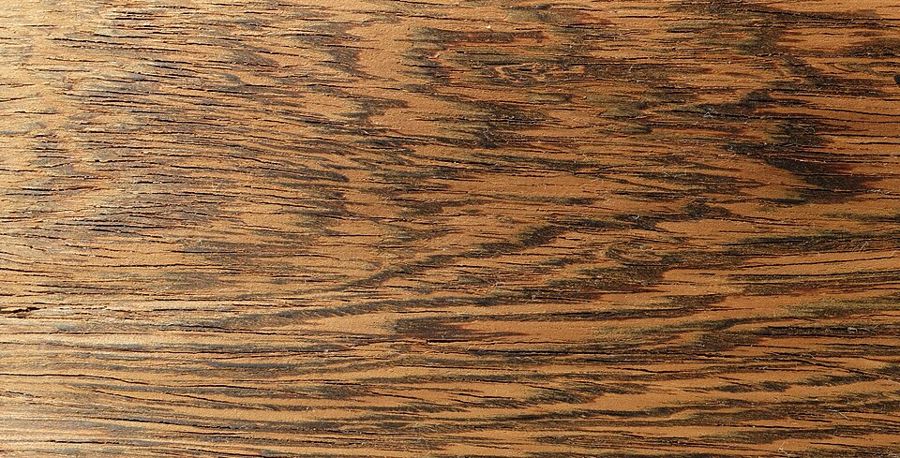
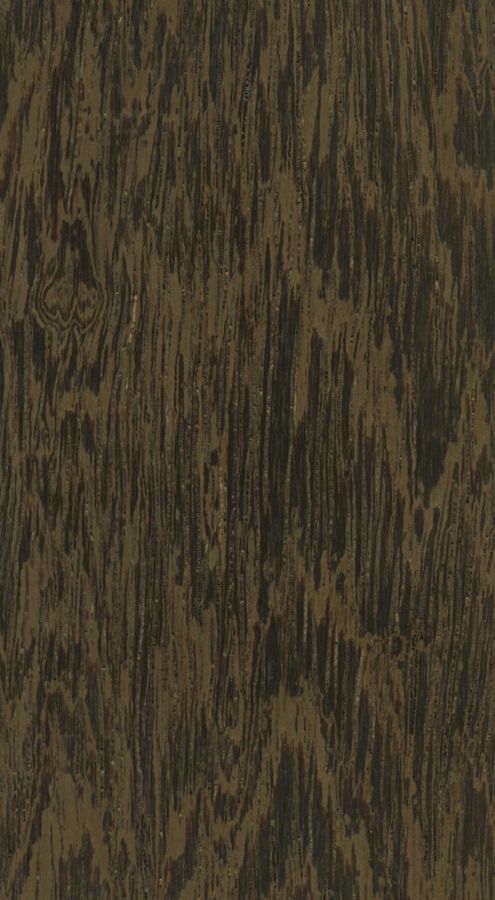
Wenge (Millettia laurentii) is a medium brown wood with nearly black streaks that can finish almost black, and is used as an ebony alternative. It is hard, strong and very durable. It is also splintery and unpleasant to work.
Pros
- Rich dark brown with black streaks, dark enough to substitute for ebony in places.
- Very durable, with good termite resistance.
- Janka 1,930 lbf, about 870 kg/m3.
- Strong and hard, widely used in furniture and flooring.
- Not CITES-listed.
Cons
- IUCN Endangered, from a population reduction of over 50% in three generations.
- Difficult to work, blunts tools, sands unevenly, and is very splintery.
- Wood Database reports central nervous system effects, abdominal cramps and irritation, and that its splinters are more likely to go septic.
- Very large pores are hard to fill.
- About $19 to $27 a board foot.
Variants and subspecies
- Millettia laurentii: the sole commercial species.
- Look-alike: Katalox (Mexican ebony) is a dark, dense Latin American alternative.
Working and finishing
Wear gloves and a respirator. Use carbide tools and light passes. Sand carefully because the light and dark bands sand unevenly. Fill the large pores if you want a glass-smooth surface.
Staining and finishing colour
Not usually stained; an oil finish can turn it nearly black. The big pores resist an even stain and a smooth film.
Sustainability and handling
CITES: not listed (Wood Database; APHIS CITES Timber Species Manual, checked 2026-09-30). IUCN: Endangered on a population reduction of over 50% over three generations. FSC availability is not verified here. The US Lacey Act makes it unlawful to trade wood taken or exported in breach of the source country's laws (fws.gov/law/lacey-act), so buy from dealers who can name the country and species. If a piece will be exported to or sold in the EU, Regulation (EU) 2023/1115 (the EUDR) requires due-diligence evidence that wood products are deforestation-free and legally produced; check its current application date with your buyer.
Ethical call: a poor choice; use Black walnut or Katalox (Mexican ebony) for a dark brown. Health: Wood Database reports dust effects on the central nervous system, abdominal cramps, skin and eye irritation and sensitization, and splinters that take longer to heal. The US National Cancer Institute reports strong, consistent associations between wood-dust exposure and cancers of the nasal cavity and sinuses, so use extraction and a respirator when sanding.
Popular projects
Furniture, flooring, guitar necks and fingerboards, inlay and striping, and turnings.
Buying notes
Bell lists 4/4 rough at $19.00 and Woodworkers Source lists 4/4 at $26.99 per board foot (September 2026). Check for large splinters and wear gloves.
Typical projects
- furniture
- flooring
- guitar necks and fingerboards
- inlay and stripes
- turned objects
More pictures

Sources
Researched 2026-09-30. Prices, conservation status and CITES listings on this page are indicative and were checked on that date. They change: confirm them with your supplier, and with the relevant authority before importing or exporting.