

Chippendale
History
Chippendale furniture takes its name from Thomas Chippendale, an English cabinetmaker whose 1754 pattern book, The Gentleman and Cabinet-Maker's Director, offered designs described as being in the "Gothic, Chinese and Modern Taste" — Modern here meaning the Rococo. The style spread across both sides of the Atlantic in the mid-eighteenth century, roughly the 1750s through the 1780s in England and into the 1790s in America, with Philadelphia developing its own especially accomplished high style. Very little surviving Chippendale furniture came from Chippendale's own workshop; the name instead describes an entire fashionable manner that many cabinetmakers worked in.
The style built directly on the earlier Queen Anne forms but reworked it in mahogany, whose strength and fine, even grain made possible a level of deep carving and delicate piercing that earlier woods could not support. Alongside the mainstream Rococo taste, two fashionable sub-modes flourished: a "Chinese" mode borrowing fretwork and pagoda forms as a European fantasy of Chinese design, and a "Gothick" mode drawing on pointed arches and tracery.
Elements
Chippendale forms are wider, squarer and heavier than Queen Anne's, with trapezoidal chair seats and broad backs beneath a serpentine, cupid's-bow crest rail with carved, upturned ears. The classic leg is the cabriole leg ending in a ball-and-claw foot, its talons gripping a carved ball, alongside a straight, square "Marlborough" leg often paired with stretchers. Case pieces grow monumental: high chests topped with scroll pediments and carved cartouches, desk-and-bookcases, and chests with dramatic block-front or serpentine fronts standing on ogee bracket feet, their profile a convex curve over a concave one with a scrolled inner edge.
Ornament is deep carving worked directly into the solid wood — acanthus leaves on knees and crests, C- and S-scrolls, rocaille, carved shells and cabochons — reaching its most elaborate on Philadelphia high chests with pierced cartouches. Chair backs carry pierced splats sawn into interlaced strapwork or Gothic arches, sometimes a carved ribbon-back pattern. In the Chinese mode, square legs carry blind or pierced fretwork and lattice backs beneath pagoda-roofed crestings. Construction is correspondingly exacting: chair seat rails are mortised and tenoned into the legs, with Philadelphia work distinguished by side rails tenoned clean through the rear stiles; case pieces are dovetailed, and bracket feet are built from mitred, shaped brackets glued over a vertical block that carries the actual weight.
Leaders in this style: historical designers and makers whose work inspired it (inspired by, not reproduced):
Designs
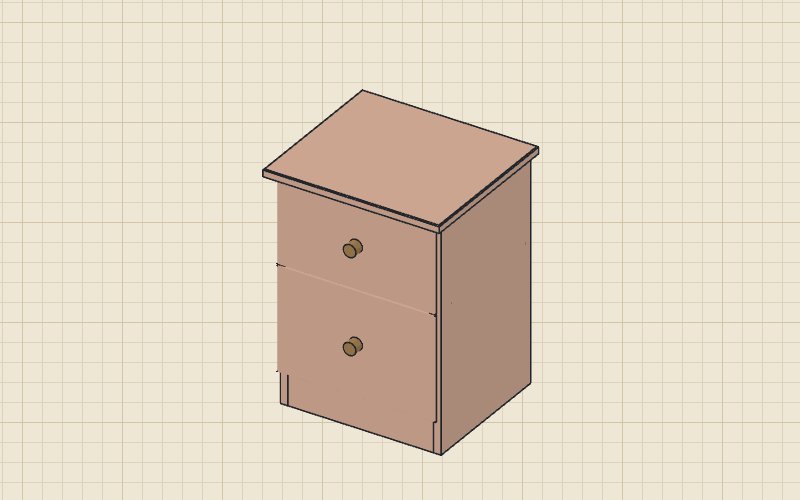
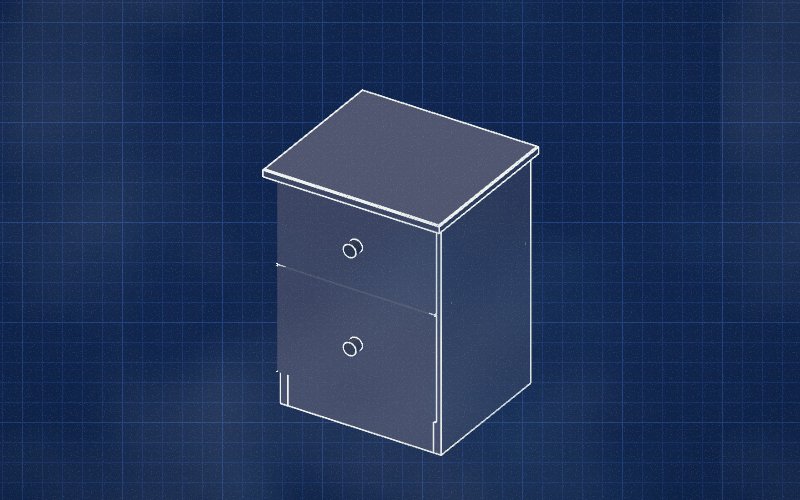
Bedside Cabinet
17.7 × 16.0 × 23.6 in (450 × 406 × 600 mm)
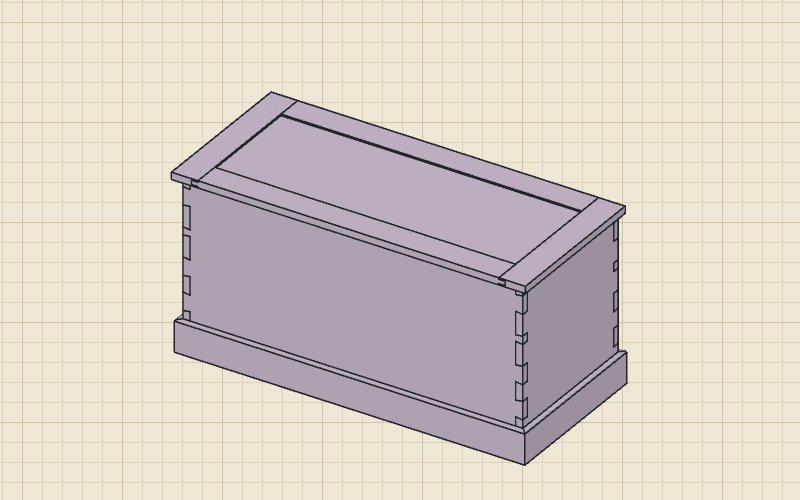
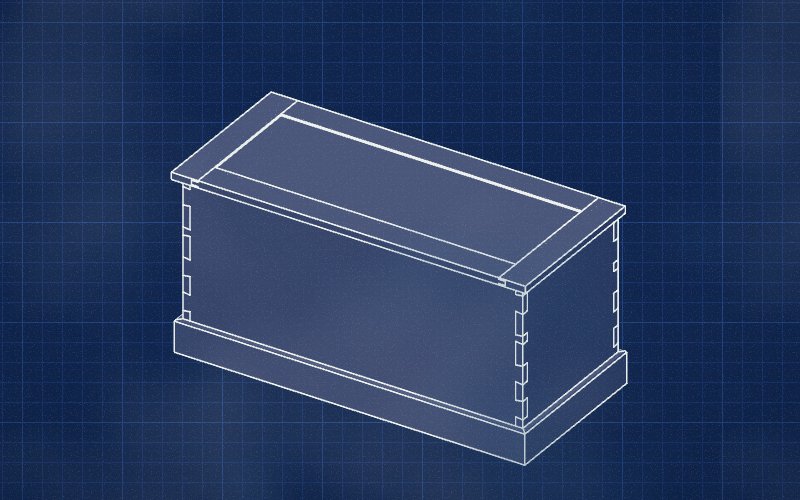
Dovetailed Blanket Chest
39.4 × 18.1 × 19.7 in (1000 × 460 × 500 mm)
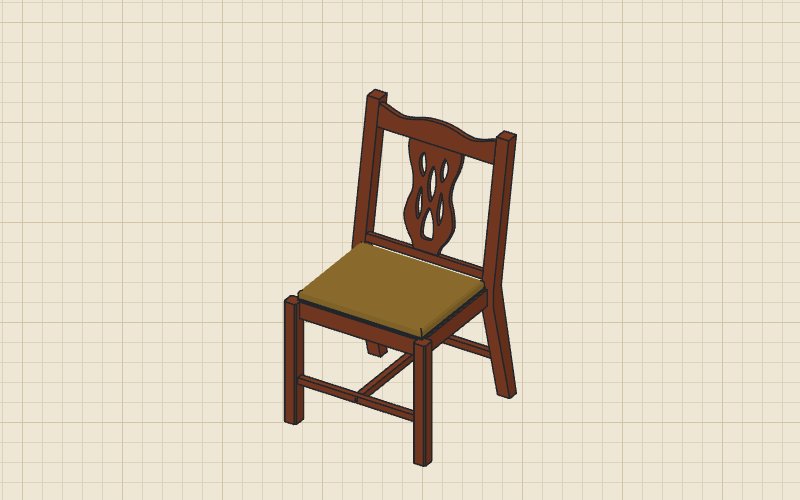
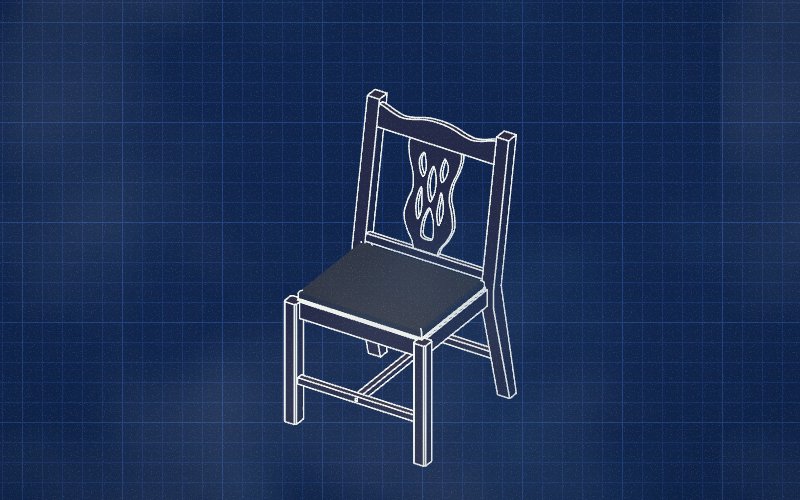
Pierced Splat Side Chair
21.3 × 21.7 × 38.2 in (540 × 552 × 970 mm)
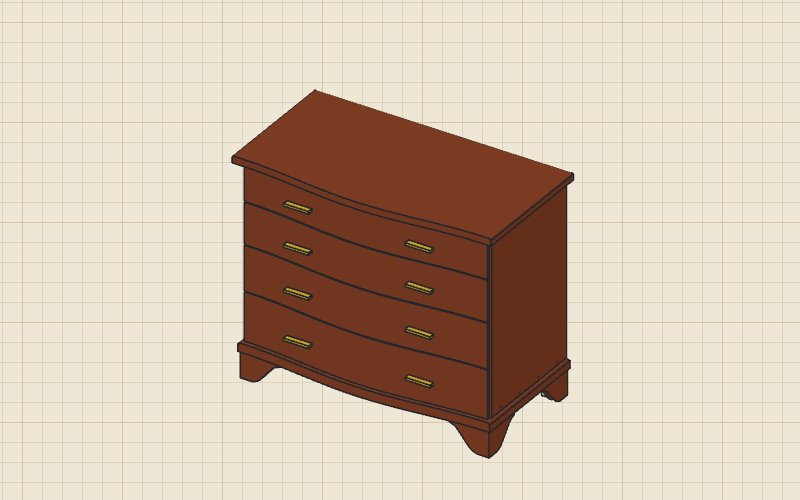
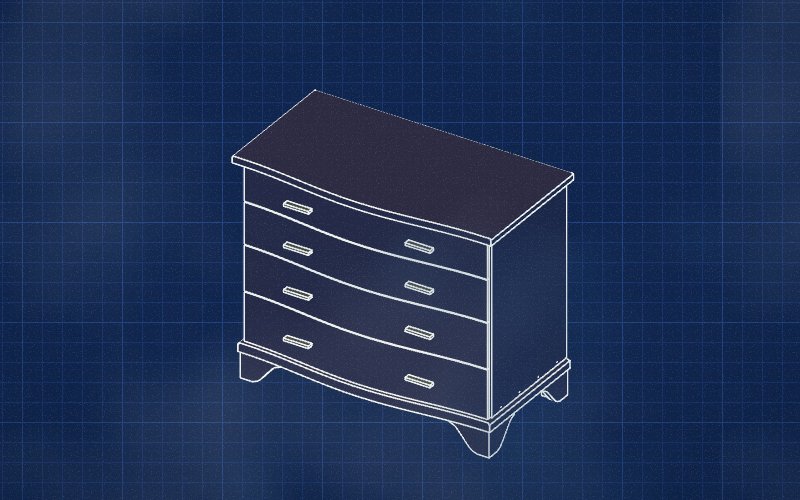
Serpentine Chest on Bracket Feet
40.9 × 22.0 × 34.6 in (1040 × 560 × 880 mm)
Hardware for this style
Hinges, pulls, fasteners and other hardware that guides to this style name.
- Drawer slides
- Wooden drawer runner
- Pulls and escutcheons
- Bail pull (batwing and forged)