

Primary Grid
History
Before tubular steel took over modernist furniture design, the first modern chairs were built in wood, in the years between about 1917 and 1937. The movement began in the Netherlands with the De Stijl group, whose member, an architect working in the Netherlands, designed the Red Blue Chair in 1918 — a lattice of stock-size square laths and flat boards, later painted in primary colors and black around 1923. The idea then moved to Germany, where a Hungarian-born designer built a slatted chair in the joinery workshop of a German design school of the 1920s, in Weimar, starting in 1922, upholstered with fabric from the school's own weaving workshop. The wood tradition returned once more in the mid-1930s when that same designer, by then working in England, designed the Isokon Long Chair in bent birch plywood, working under the influence of a Finnish architect and designer of the same period.
Elements
This is furniture built as a diagram: rectilinear, open frameworks in which every part (seat, back and arm boards) stays visually separate and legible rather than merged together. Members are square laths in stock sizes, cut square at the ends and run past one another at each crossing, with no taper, turning or moulding anywhere. The crossed-lath joint is the style's clearest signature: three laths, one along each axis, lapping past each other and doweled rather than notched, so each lath keeps its full, uncut section on display. There is no applied ornament; where color appears, as in the Dutch architect's primary-colored scheme, it is used structurally, to separate one element from another rather than to decorate a surface. Seats and backs are either flat boards set at an angle or stretched fabric, and the style's later phase, the Isokon Long Chair, shows the same rectilinear discipline giving way to a single continuous bent-plywood seat on a laminated frame.
Leaders in this style: historical designers and makers whose work inspired it (inspired by, not reproduced):
Designs
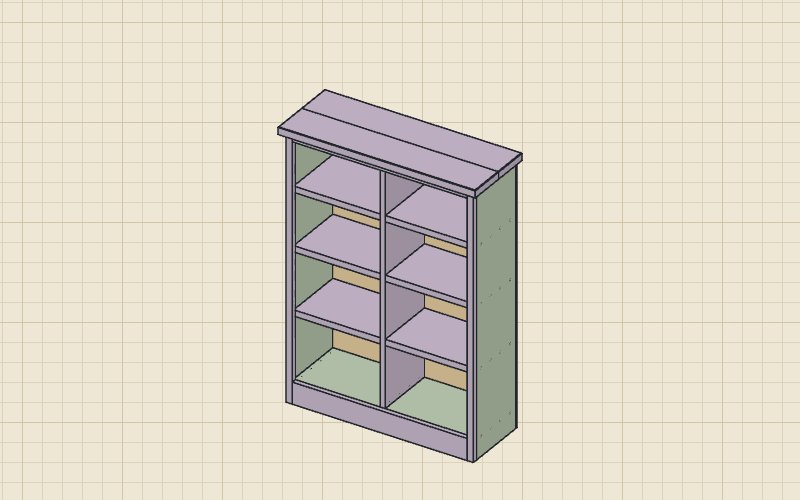
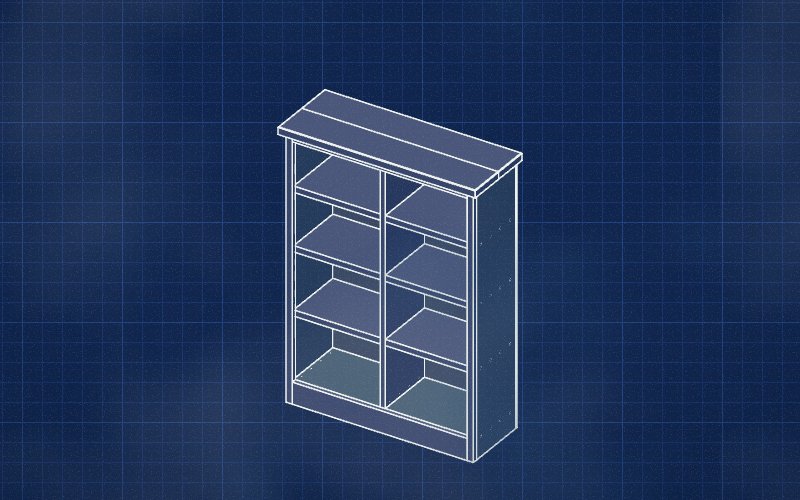
Knock-Down Bookcase
31.5 × 11.8 × 43.3 in (800 × 300 × 1100 mm)
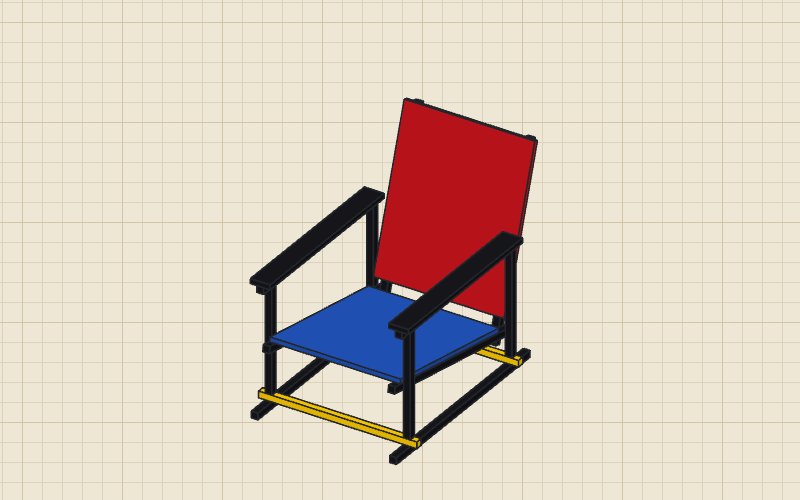
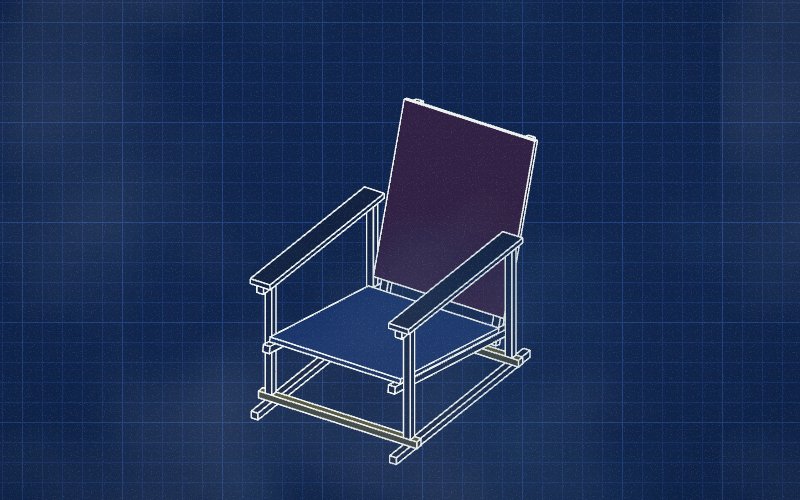
Primary Grid Lath Armchair
28.3 × 43.1 × 35.9 in (720 × 1094 × 911 mm)
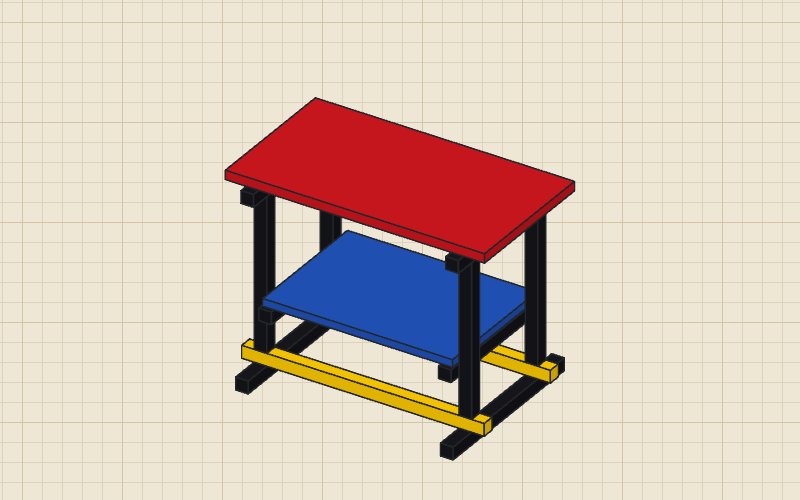
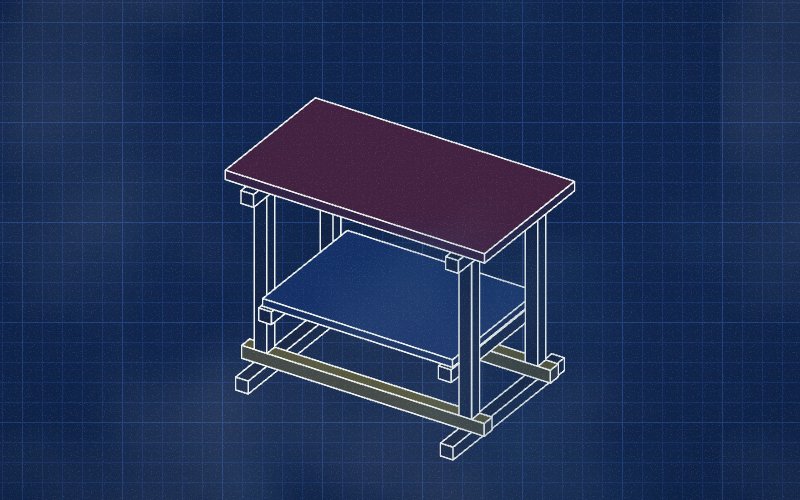
Primary Grid Lath Side Table
24.4 × 16.5 × 18.9 in (620 × 420 × 480 mm)
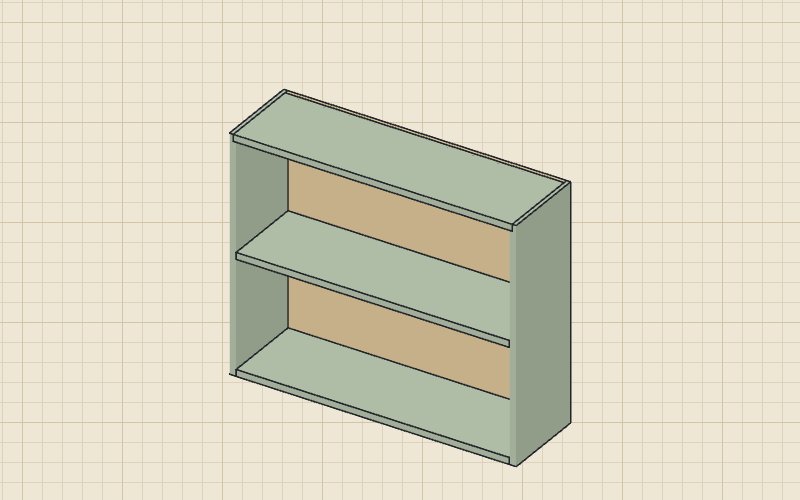

Wall-Mounted Bookshelf
31.5 × 9.4 × 26.0 in (800 × 240 × 660 mm)