


Overview
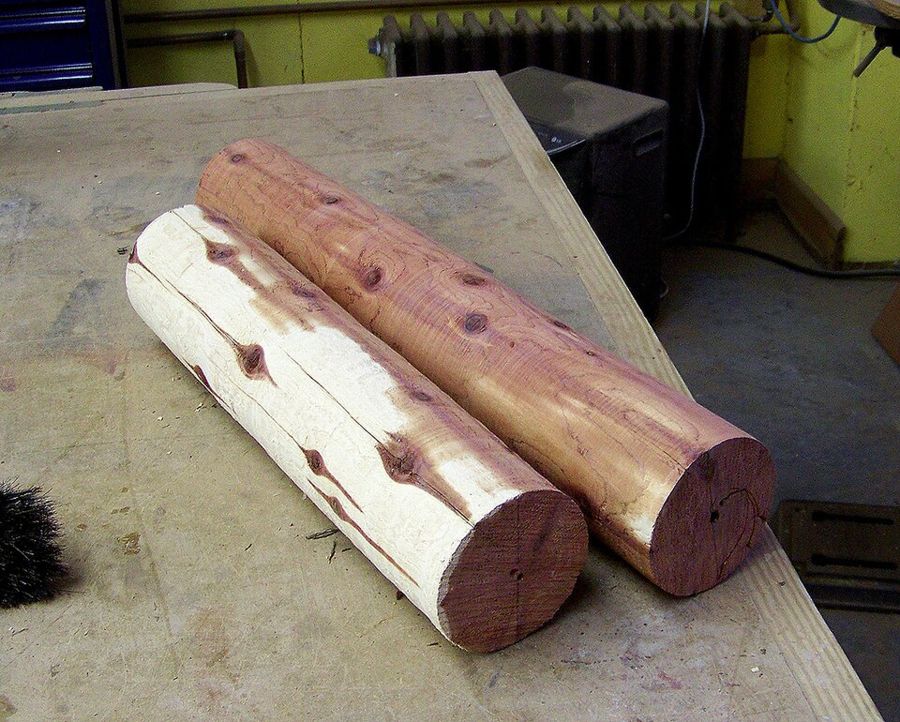
The pungent, pink-to-purple heartwood used to line closets and chests because moths dislike the smell. It is botanically a juniper, not a true cedar. It is knotty, fine-textured and surprisingly hard for a softwood, and carries bold sapwood streaks that some people love and others avoid.
Pros
- Excellent decay and insect resistance (Wood Database).
- Distinctive aroma and rich colour.
- Hard for a softwood: Janka 900 lbf.
- Easy to work; glues and finishes well.
Cons
- High silica content can dull cutters (Wood Database).
- Boards are usually small and knotty; large, clear stock is uncommon.
- Colour fades toward brown in sunlight.
- Skin and respiratory irritation reported (Wood Database).
Variants and subspecies
- Heartwood-only boards: all red, the premium aromatic grade.
- Mixed (sapwood streaks): cheaper, with white streaks.
- Fence-post stock: rough and unseasoned.
- Other cedars with different traits: Western red cedar and Incense cedar.
Working and finishing
Planes and turns well, but knots and silica wear tools; use sharp carbide or high-speed steel. Glues without problems. For closet linings no finish is needed; a finish will mute the aroma, which fades over time and can be refreshed by light sanding.
Staining and finishing colour
Usually left natural or oiled to keep the colour. Stain is rarely used; the sapwood and heartwood take colour differently, and the resinous heartwood can resist penetration. The reddish colour fades gradually to brown.
Sustainability and handling
Not CITES-listed (Wood Database; checked 2026-09-30); IUCN Least Concern as of 2026-09-30. The Wood Database reports that aromatic red cedar can cause skin and respiratory irritation. The dust is also strongly scented; use extraction and a mask.
Popular projects
Closet linings, hope chests and blanket boxes, drawer bottoms, small boxes, birdhouses, fence posts, carvings and outdoor furniture.
Buying notes
Small, often knotty boards are common; large clear boards are rarer. Retail evidence for 4/4: Northwest Lumber $4.95, countryconcepts.com $5.50, Hearne Hardwoods $7-8 unselected, thewoodyard.com $7.50 (Sept 2026). A North Carolina sawmill listed eastern red cedar rough at $1.75 per bf. Choose heartwood-rich boards.
Typical projects
- closet and chest linings
- hope chests
- fence posts
- birdhouses
- outdoor furniture
- pencils
Sources
Researched 2026-09-30. Prices, conservation status and CITES listings on this page are indicative and were checked on that date. They change: confirm them with your supplier, and with the relevant authority before importing or exporting.