

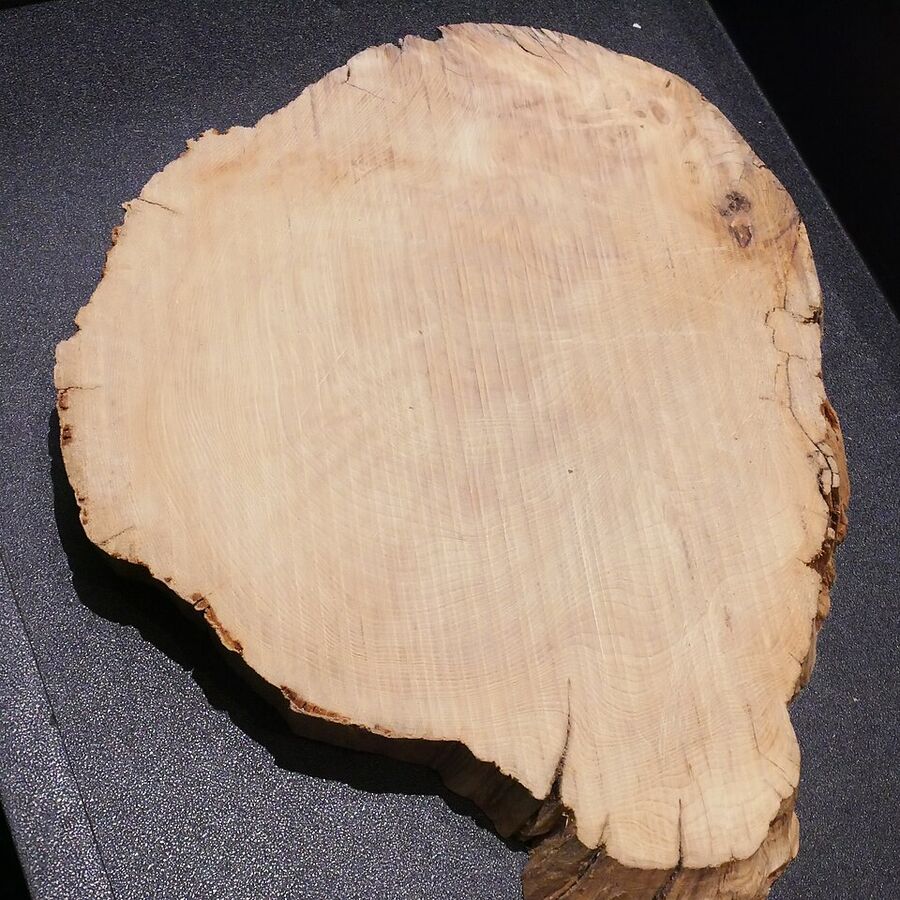

Overview
Hinoki is the Japanese cypress, Chamaecyparis obtusa. J-wood describes it as a durable, fragrant wood with a pink heartwood and an almost white sapwood, used for temples, palaces, baths and fittings. Wikipedia adds its lemon scent, its light pinkish-brown colour and its high rot resistance. It is the benchmark wood of Japanese joinery. Choose it for bath and kitchen items, boxes, and fine carcass or drawer work where scent and clean look matter.
Pros
- Light: J-wood gives an air-dry specific gravity of 0.44, with 0.30 to 0.45 reported for dry wood and 0.38 as a mean.
- Highly rot-resistant (Wikipedia) and durable (J-wood), so it suits baths and damp places.
- Pleasant lemon scent, light colour and fine, even look.
- Long record in Japanese furniture: Wikipedia's tansu article notes hinoki as the primary framing and drawer-face wood in some chests, such as Sakai choba-dansu with hinoki faces on a sugi case.
Cons
- I could not find a Janka figure from a source I could open, so none is given. It is a light softwood and will dent easily.
- Costly and hard to find in the US; no verified US price.
- Wikipedia describes the scent as lemon-like; the sources I read do not say how long it lasts, so do not count on a lasting aroma.
- Near Threatened as a tree species, so ask about plantation origin.
Variants and subspecies
- Chamaecyparis obtusa (Japanese hinoki) is the standard timber.
- A Taiwan variety, C. obtusa var. formosana (also treated as C. taiwanensis), is logged in Taiwan; the photo here is of this tree, not the Japanese one.
- Sold alongside, but different: Sugi, the other Japanese building conifer, and Kaya, the board wood.
Working and finishing
I found no machining or gluing data for hinoki in the sources I opened, so treat this as general advice for a light, soft conifer: sharp tools, light clamping pressure so edges are not crushed, and offcut tests for glue and finish. Japanese bath and kitchen pieces are traditionally left bare, which keeps the scent.
Staining and finishing colour
No source I read tests stain on hinoki. The pink-to-pale colour is what people buy it for, so it is usually left natural. If you do stain, test on offcuts first.
Sustainability and handling
Wikipedia lists C. obtusa as Near Threatened on the IUCN Red List. I searched the Species+ database for hinoki on 2026-09-30 and found no CITES listing. US imports are subject to the Lacey Act, which since 2008 covers timber and bars trade in plants taken in violation of law, including foreign law. EU buyers are covered by the EU deforestation regulation for wood and furniture, in force from 30 December 2026 for large and medium operators. I found no sourced toxicity data for hinoki beyond generic wood-dust irritation, so use dust extraction.
Popular projects
Bath tubs and stools, masu (measuring-box) cups, noh stages, shrine and temple joinery, and in tansu as framing and drawer faces. Small boxes and drawer sides suit the light weight and scent.
Buying notes
Hinoki reaches North America mostly as Japanese-made lumber, flooring or finished goods from specialist importers. Ask for plantation-grown stock, the Latin name and kiln-dried boards. For a North American cypress-family alternative, see Port Orford cedar; it is a different wood.
Typical projects
- bath tubs
- masu boxes
- tansu frames and drawer faces
- temple and shrine joinery
- noh stage floors
Sources
- www.j-wood.org/en/tree-species/hinoki
- en.wikipedia.org/wiki/Chamaecyparis_obtusa
- en.wikipedia.org/wiki/Tansu
- commons.wikimedia.org/wiki/File:%E6%89%81%E6%9F%8F%E5%B9%B4%E8%BC%A...
- speciesplus.net
- en.wikipedia.org/wiki/Lacey_Act_of_1900
- environment.ec.europa.eu/topics/forests/deforestation/regulation-de...
Researched 2026-09-30. Prices, conservation status and CITES listings on this page are indicative and were checked on that date. They change: confirm them with your supplier, and with the relevant authority before importing or exporting.