


Overview
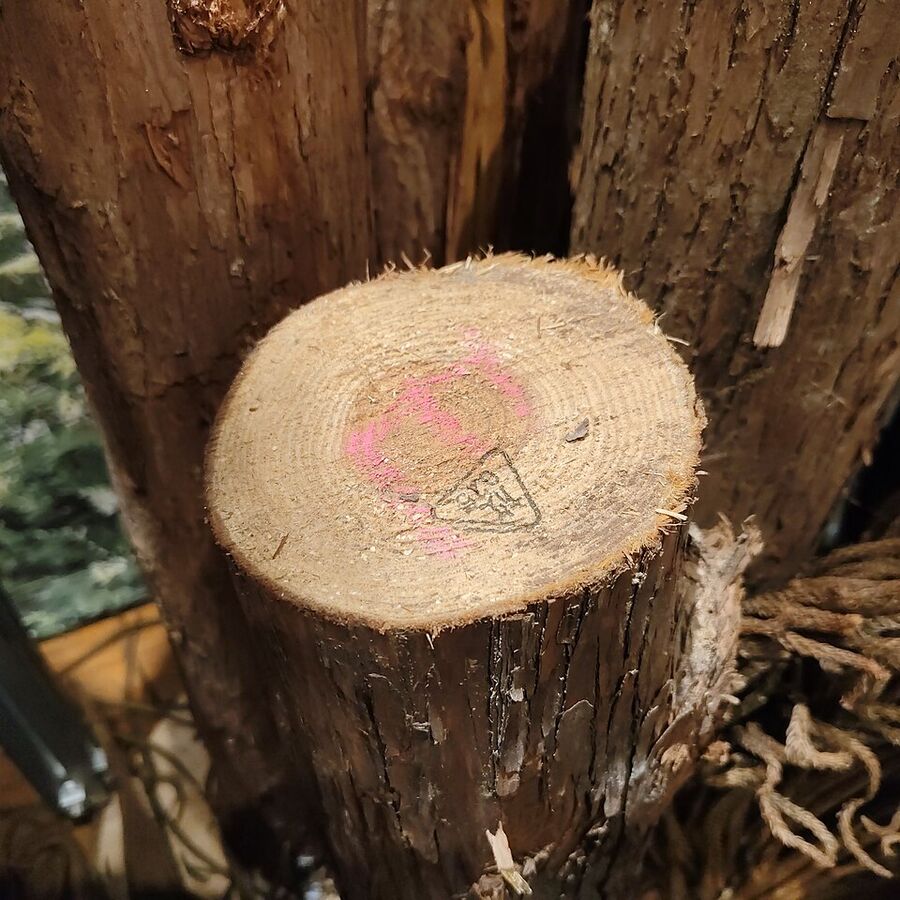
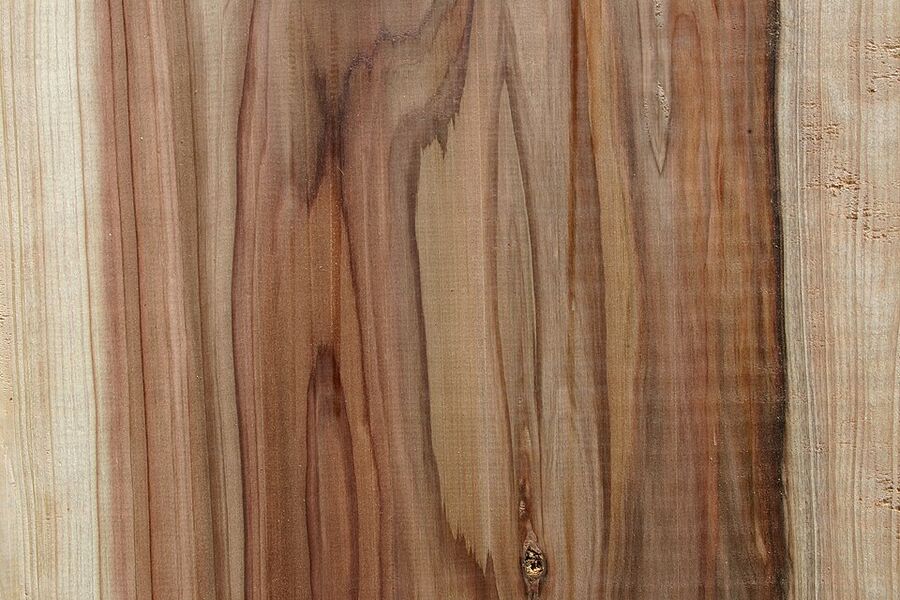
Sugi, Cryptomeria japonica, is Japan's most widely planted timber tree. The wood is a soft, light, reddish-brown softwood with straight grain, and it is the usual carcass wood of Japanese tansu. Choose it for lightweight casework, interior boards and panelling, and for the charred shou sugi ban finish. It is not a "cedar" botanically, although it is sold as Japanese cedar.
Pros
- Very light and soft: Wood Database gives 320 lbf Janka at about 360 kg/m3.
- Straight grain and a warm reddish heartwood (Wood Database).
- Wood Database rates it moderately durable and says it stains well.
- Wood Database calls the price mid-range for an imported softwood, so it is not a luxury timber.
- Lined or framed tansu: Wikipedia's tansu article lists sugi among tansu woods, and Sendai chests have keyaki faces on a sugi case (see Keyaki).
Cons
- Too soft for tabletops or anything that takes knocks.
- Knots are common (Wood Database).
- Poor steam bending (Wood Database).
- Sawdust and pollen are allergenic (Wood Database), so dust control matters.
- Only moderately durable, so it is not a first choice for ground contact.
Variants and subspecies
- Cryptomeria japonica from Japan, the usual source of Japanese sugi lumber.
- Var. sinensis is the Chinese form (Wikipedia).
- Plantation sugi from the Azores and elsewhere (Wikipedia) reaches the market as "Japanese cedar" or cryptomeria. The photo here is of a plank grown in South Africa.
- Compare Hinoki, the denser, paler Japanese cypress.
Working and finishing
Wood Database rates it easy to work, and it says sugi stains well. As a very soft wood it will crush under heavy clamping or tool pressure, and the knots Wood Database mentions may need care. I found no glue or finish data for the species, so test on offcuts. Wood Database also notes the charred surface treatment known as shou sugi ban.
Staining and finishing colour
Wood Database says sugi stains well. Heartwood is reddish brown and sapwood is paler, so a stain can help even out colour. Charring (shou sugi ban) is the best-known Japanese alternative and is a different finish, not a stain. Test on offcuts either way.
Sustainability and handling
Sugi is grown in plantations and is not under CITES: I searched the Species+ database on 2026-09-30 and found no listing. Wood Database lists the IUCN status as Near Threatened and notes that the timber is plantation-grown. US imports fall under the Lacey Act, which since 2008 covers timber and bars trade in plants taken in violation of law, including foreign law. EU buyers fall under the EU deforestation regulation for wood and furniture (from 30 December 2026 for large and medium operators). Wood Database lists sawdust and pollen as allergenic: wear a respirator when sanding.
Popular projects
Tansu carcasses, interior panelling, boxes and burnt-board cladding. For a modern cabinet, use sugi where weight matters and a harder wood on faces and tops.
Buying notes
Sold mostly as Japanese-made boards and shou sugi ban cladding. Check whether you are being sold true Cryptomeria or another "cedar". Ask for kiln-dried boards and the origin; plantation timber from Japan or the Azores is common.
Typical projects
- tansu carcasses
- shou sugi ban cladding
- boxes
- interior panelling
- sake casks
Finishes that suit this
More pictures

Sources
Researched 2026-09-30. Prices, conservation status and CITES listings on this page are indicative and were checked on that date. They change: confirm them with your supplier, and with the relevant authority before importing or exporting.