


Overview
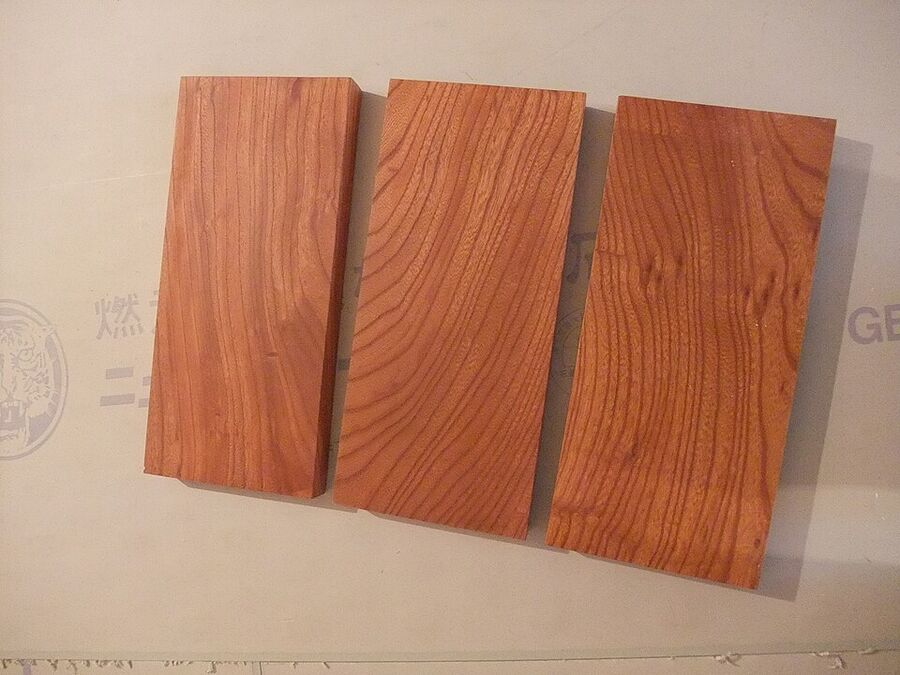
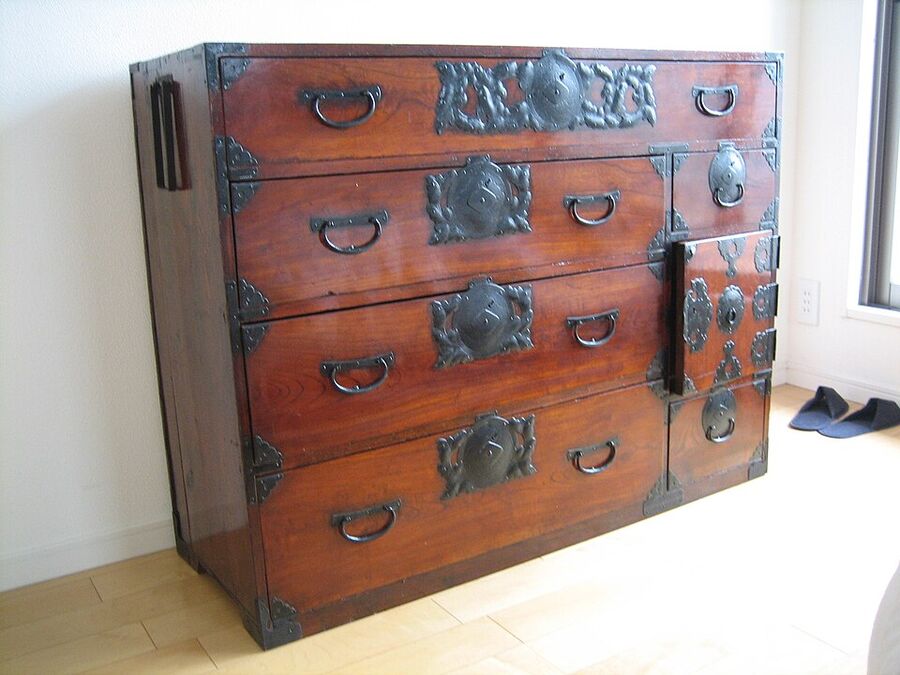
Keyaki is the Japanese name for Zelkova serrata, the standard "show" hardwood of Japanese joinery. The heartwood is a golden to medium brown with straight to irregular, interlocked grain that gives lively figure on flat-sawn faces. It is the classic face wood of Sendai tansu chests and a traditional choice for taiko drum shells. Pick it for pieces where the grain is the decoration. It is hard to buy outside Japan.
Pros
- Hard but workable: Wood Database gives 1,040 lbf Janka at about 620 kg/m3 and rates it easy to work.
- Wood Database calls the heartwood very durable.
- Distinctive open, figured grain that suits clear finishes.
- Deep tradition: Wikipedia's tansu article places keyaki among the woods of Japanese chests, with open-grain keyaki faces on a sugi case in Sendai pieces.
Cons
- Wood Database describes it as generally not commercially available. Outside Japan you will mostly find bowl blanks or specialist stock.
- Interlocked and irregular grain can tear out when planing against it.
- No verified US lumber price: treat any quote as a negotiated, imported price.
- The tree is listed Near Threatened, so sourcing deserves a paper trail.
Variants and subspecies
- Zelkova serrata (keyaki proper), the Japanese tree.
- Z. serrata var. tarokoensis from Taiwan, which Wood Database notes has a higher density than the Japanese type.
- Not to be confused with elms: zelkovas are elm-family trees but not Ulmus. For a European elm see European elm.
Working and finishing
Wood Database rates machining as easy. Take light passes or use a scraper on irregular, interlocked patches. Because the grain is open and decorative, oil, wax or clear lacquer shows it best. I found no tested glue or finish data for the species specifically, so test on offcuts.
Staining and finishing colour
No source I opened tests stain on keyaki. Its heartwood already sits at a light-to-medium golden brown, and traditional pieces show the grain rather than hiding it. If you do stain, expect open earlywood to take more colour and exaggerate the grain. Trial boards first.
Sustainability and handling
The IUCN status is Near Threatened according to both Wood Database and Wikipedia. Wood Database and the Species+ database, searched on 2026-09-30, show no CITES listing for Zelkova serrata. Imports into the US fall under the Lacey Act, which since its 2008 amendment covers timber and bars trade in plants taken in violation of the law, including foreign law. EU buyers fall in scope of the EU deforestation regulation, which covers wood and furniture and applies from 30 December 2026 for large and medium operators. Wood Database reports no known toxicity beyond dust; treat the dust as an irritant and extract it.
Popular projects
Tansu and cabinet fronts, drum shells (Wikipedia calls it the ideal taiko wood), alcove and shrine boards, trays and turned bowls. The Sendai isho-dansu pairs keyaki faces with a sugi carcass, a good model for a small cabinet.
Buying notes
Expect to source through a Japanese or specialist importer. Zelkova bowl blanks are sold at US specialty shops by the piece, which is not comparable with a per-board-foot lumber price. Ask for kiln-dried stock, the species name in Latin and a sourcing statement. See also Sugi for the traditional carcass wood.
Typical projects
- tansu chests
- drum shells
- temple and shrine fittings
- turned bowls
- alcove boards
More pictures

Sources
Researched 2026-09-30. Prices, conservation status and CITES listings on this page are indicative and were checked on that date. They change: confirm them with your supplier, and with the relevant authority before importing or exporting.