

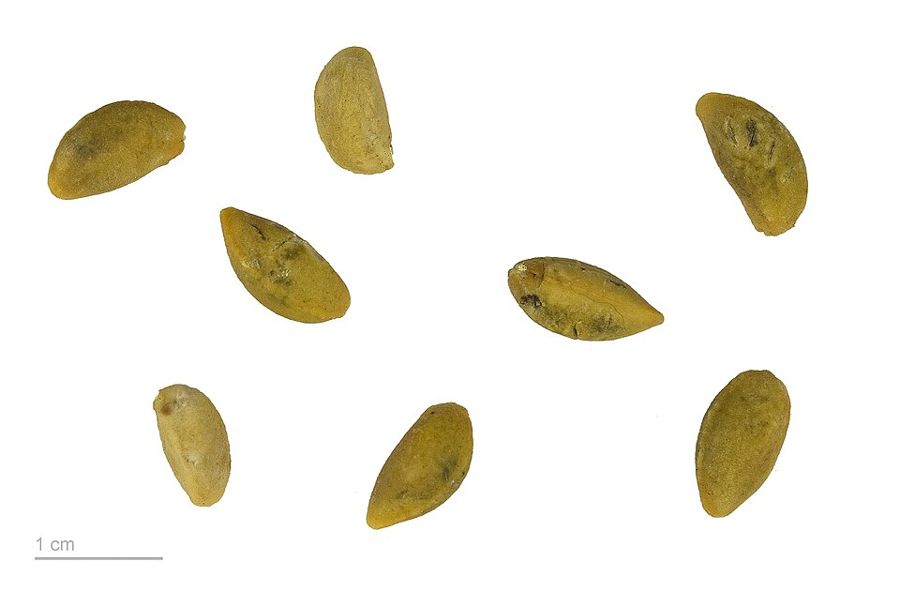

Overview
Lignum vitae (Guaiacum officinale and G. sanctum) is the densest commercial timber in this guide: olive to dark green-brown or nearly black, oily and self-lubricating, used for bearings, mallets and turned pieces. The name means 'wood of life'. It is also Endangered, heavily regulated and very expensive.
Pros
- Janka 4,390 lbf and about 1,260 kg/m3; hardest wood in this guide.
- Very durable outdoors and very resistant to insects, per Wood Database.
- Natural oils make it self-lubricating, which is why it is used for bearings and bushings.
- Striking dark green-black colour that darkens further with age.
- Unmatched for mallet heads and wear parts.
Cons
- Endangered (IUCN 2019 assessment) and in CITES Appendix II; legal trade is restricted.
- Wood Database says prices are very high and supply is often from questionable sources.
- Extremely dense: it skips over jointer knives, dulls cutters and is considered difficult to work.
- Very oily, so strong glue joints are hard to get.
- Reported to cause skin irritation.
Variants and subspecies
- Guaiacum officinale and G. sanctum: genuine lignum vitae.
- Argentine lignum vitae or verawood: a different, lighter-coloured genus often used as a substitute; Wood Database says genuine lignum vitae tends to be darker.
- Substitutes: Katalox (Mexican ebony) is similarly dense and dark with no CITES listing.
Working and finishing
Take very light passes, use sharp carbide and expect to change tools often. Work with grain direction in mind and use drill bits designed for dense woods. Do not rely on glue joints. It turns well and polishes to a waxy lustre without a film finish.
Staining and finishing colour
Not stained. Colour darkens with age and light. A wax or oil finish suits it; the natural oils resist some finishes.
Sustainability and handling
CITES: Guaiacum spp. are in Appendix II, covering all parts and derivatives except finished retail-packaged products (APHIS CITES Timber Manual; checked 2026-09-30). IUCN: Endangered (Barstow 2019, G. officinale) because populations are severely reduced by hundreds of years of exploitation for wood and resin. FSC availability is not verified here. The US Lacey Act makes it unlawful to trade wood taken or exported in breach of the source country's laws (fws.gov/law/lacey-act), so buy from dealers who can name the country and species. If a piece will be exported to or sold in the EU, Regulation (EU) 2023/1115 (the EUDR) requires due-diligence evidence that wood products are deforestation-free and legally produced; check its current application date with your buyer.
Ethical call: a poor choice for most projects. Wood Database describes the genus as exploited to the brink of extinction. If you need a hard, dense dark wood use Katalox (Mexican ebony); for mallet heads consider Hickory or Hard maple. Health: reported to cause skin irritation. The US National Cancer Institute reports strong, consistent associations between wood-dust exposure and cancers of the nasal cavity and sinuses, so use extraction and a respirator when sanding.
Popular projects
Carpenter's mallet heads, bushings and bearings, pulley wheels, tool handles, turned objects, knife scales and small inlays.
Buying notes
Sold only as turning squares, blocks and scales: one specialist lists 24 in x 1.5 in squares at $57, which is about $152 per board foot. Ask for CITES paperwork and the species name; skip unlabelled 'lignum vitae' chunks.
Typical projects
- mallet heads
- bearings and bushings
- tool handles
- pulley wheels
- turned objects
- knife scales
Sources
- www.wood-database.com/lignum-vitae
- exoticlumber.com
- www.aphis.usda.gov/sites/default/files/cites.pdf
- www.fws.gov/sites/default/files/documents/CoP19%20timber%20outcomes...
- www.fws.gov/sites/default/files/documents/2026-01/ole-public-bullet...
- www.fws.gov/law/lacey-act
- eur-lex.europa.eu/eli/reg/2023/1115/oj
Researched 2026-09-30. Prices, conservation status and CITES listings on this page are indicative and were checked on that date. They change: confirm them with your supplier, and with the relevant authority before importing or exporting.