


Overview
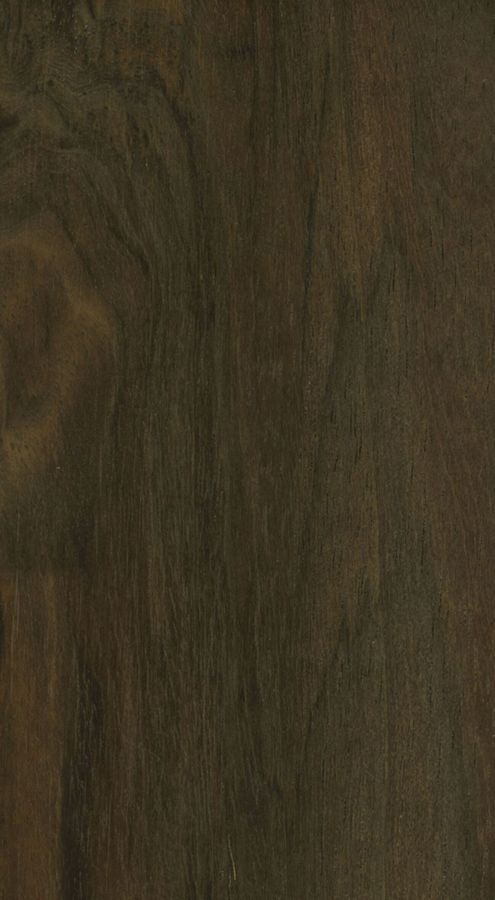
Peruvian walnut (Juglans spp.), also called tropical walnut or nogal, is a deep chocolate brown, sometimes purple-tinged, easy to work and priced between domestic walnut and exotic hardwoods. It is a plausible substitute for black walnut. It is also a trade name more than a species, and the botanical origin is rarely certain.
Pros
- Heartwood is darker than temperate walnuts: deep chocolate brown with a purplish hue.
- Typically easy to work if grain is straight; glues, stains and finishes well.
- Janka 960 lbf, about 600 kg/m3, so it is workable but harder than American cherry or mahogany.
- Moderately durable.
- Moderate price for an imported wood.
Cons
- Pricier than domestic walnut.
- Lighter streaks can be extensive and cause waste.
- Planer tear-out on irregular or figured grain.
- Susceptible to insect attack; only moderately durable.
- Other Juglans species are sensitizers, and Wood Database expects Peruvian walnut to behave similarly.
Variants and subspecies
- Juglans spp.: tropical walnuts, sold under Peruvian walnut, tropical walnut and nogal; the botanical source may not be Peru.
- Juglans neotropica: the best-known species, listed Endangered by IUCN with a decline above 50% over three generations.
- Look-alikes: see Black walnut for the domestic option, and African walnut (lovoa) (a different wood, not a true walnut).
Working and finishing
Plane with sharp knives and light cuts; scrape or card-scrape where grain is irregular. It glues, stains and finishes well. Typical oil, varnish and lacquer finishes all work.
Staining and finishing colour
Takes stain well, though the natural deep chocolate is the point. Colour tends to be darker than domestic walnut, so match boards by eye.
Sustainability and handling
CITES: not listed (Wood Database; APHIS CITES Timber Manual, checked 2026-09-30). IUCN: a number of tropical Juglans species are Red-Listed; the most notable, J. neotropica, is Endangered. FSC availability is not verified here. The US Lacey Act makes it unlawful to trade wood taken or exported in breach of the source country's laws (fws.gov/law/lacey-act), so buy from dealers who can name the country and species. If a piece will be exported to or sold in the EU, Regulation (EU) 2023/1115 (the EUDR) requires due-diligence evidence that wood products are deforestation-free and legally produced; check its current application date with your buyer.
Ethical call: moderate; ask for the species and country. If in doubt, domestic Black walnut is the safer substitute. Health: other Juglans are reported sensitizers, and similar reactions are likely. The US National Cancer Institute reports strong, consistent associations between wood-dust exposure and cancers of the nasal cavity and sinuses, so use extraction and a respirator when sanding.
Popular projects
Furniture, cabinetry, veneered panels, flooring, interior trim, guitars and other musical instruments.
Buying notes
Two retailers list 4/4 at $13.00 and $12.99 per board foot (September 2026). Inspect for pale streaks and waste. Ask for the species name; 'Peruvian walnut' is a market name.
Typical projects
- furniture
- cabinetry
- veneer
- flooring
- musical instruments
- interior trim
Sources
Researched 2026-09-30. Prices, conservation status and CITES listings on this page are indicative and were checked on that date. They change: confirm them with your supplier, and with the relevant authority before importing or exporting.