


Overview
Reclaimed lumber is processed wood recovered from an earlier use, most often timbers and decking from old barns, factories and warehouses, and sold again for new work. It is also sold as antique, distressed or recovered lumber. Its draw is character: nail holes, saw marks, patina and the tight grain of slow-grown timber that is hard to buy new. Pick it for a story and a weathered look, not for the cheapest or most predictable board.
Pros
- Distinctive surface and colour that new wood only imitates.
- Often old-growth or slow-grown stock with tight rings, notably longleaf Reclaimed heart pine.
- Diverts timber from the waste stream and avoids a fresh harvest.
- Usually dry and stable once it has been conditioned indoors.
Cons
- Pricey for what it is: boards run roughly $7 to $14 per board foot, and wide or long stock more.
- Hidden nails, screws and grit ruin knives and saw blades; waste from defects is high.
- Species and history are often unknown, so dust and finish behaviour are uncertain.
- Old paint may contain lead; insect damage can linger.
Variants and subspecies
- Barn siding and boards: weathered faces, often oak (White oak, Red oak), pine, chestnut or elm; the cheapest route.
- Hand-hewn and sawn beams: sold by the run foot or board foot; the beam price is much higher.
- Re-sawn lumber: old timbers milled to fresh faces, trading some patina for flatness.
- Related entries: Reclaimed heart pine (old-growth longleaf), Pallet wood (shipping pallets), Urban wood and Live-edge slabs (city trees).
Working and finishing
Metal-detect every board and pull nails before milling; even small fragments damage cutters. Let boards acclimatise in the shop, plane a light skim and check for hidden splits and for cupping. Brush off grit first, wash grimy surfaces and let them dry. Glue-ups work as with any dry stock, but check moisture, since reclaimed boards can be inconsistent. Treat shallow nail holes as decoration or fill them with a contrasting epoxy.
Staining and finishing colour
Weathered surfaces take stain unevenly and can hold iron stains or oil from earlier use. Clear oil or wax keeps the patina; test dye or pigment on an offcut before committing. Freshly planed faces will look much paler than the aged surface and will darken over time, so decide in advance whether to plane or keep the original face.
Sustainability and handling
Reclaimed timber is the lowest-impact way to buy wood, but check it. Before 1978 paint in the US commonly contained lead: EPA notes it banned lead paint for homes that year and that about three-quarters of pre-1978 US homes still contain some (EPA, checked 2026-09). Do not sand or cut painted stock without testing, and strip or discard it. Species may be unknown; treat dust as a respiratory irritant and use extraction. On legal flags, APHIS does not require a Lacey declaration for used, recycled or reclaimed wooden products in tariff provision 4415 (checked 2026-09); other imported reclaimed lumber should still be sourced with care.
Popular projects
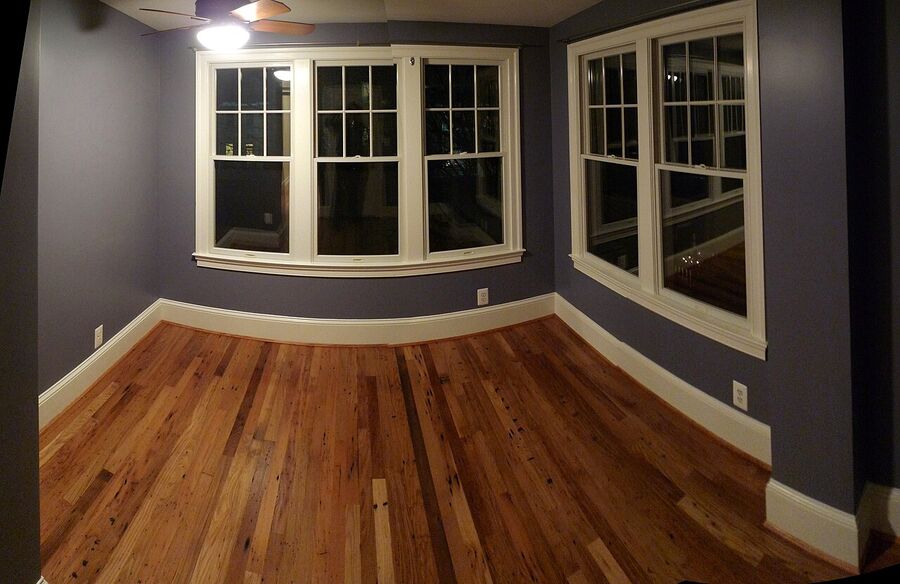
Farmhouse and dining tables, mantels and floating shelves, headboards, feature walls, bar tops, and floors. It suits pieces where a visible, aged face is the point.
Buying notes
Dealers sell it by the board foot, run foot or square foot, kiln-dried or processed to varying degrees; ask whether the lumber has been kiln-treated for insects and de-nailed. Salvage yards are cheap but unprocessed. Specialist dealers cost more but sell metal-checked stock. Ask for the species, source building and age. Avoid anything with fresh powder or small exit holes, and be wary of "reclaimed look" boards made from new wood.
Typical projects
- dining and farmhouse tables
- mantels
- shelves
- headboards
- accent walls
- flooring
Sources
Researched 2026-09-30. Prices, conservation status and CITES listings on this page are indicative and were checked on that date. They change: confirm them with your supplier, and with the relevant authority before importing or exporting.