

Studio Furniture
History
Studio furniture is the American tradition of the maker-designer, one person conceiving and building each piece rather than a factory producing a fixed design, running from the mid-twentieth century to today. Three figures set its main directions: one, working in California from the 1950s, built freeform sculpted seating from solid wood, sculpting a chair's seat and back to the body by eye and feel; another, a self-taught cabinetmaker working in Northern California from the 1950s onward and trained in a European tradition, built small cabinets on stands that treated the stand as sculpture in its own right; a third, working in Pennsylvania from 1946, built slab furniture that let a live-edge board's own outline determine the design.
Elements
Three distinct vocabularies make up the style. Sculpted seating is organic and continuously curved, with no flat surface anywhere a hand or body touches it — arms flow into legs, backs flow into seats — carved and sanded until every transition disappears into the next. Cabinets on stands separate a rectilinear cabinet from a stand built almost as an independent sculptural object, sometimes bowed or angular, always distinct from the box it carries. Slab furniture keeps a board's natural undulating edge as the piece's own outline, often paired with a contrasting butterfly-shaped key inlaid across a crack to stop it from spreading, and legs are set at a
compound splay so the piece reads as resting rather than merely standing.
Ornament in all three vocabularies comes from the wood and the joint, never applied: burl, spalting and figure are chosen and oriented deliberately, and the butterfly key, a joint whose whole purpose is visible reinforcement, doubles as the style's clearest signature. Construction favors solid wood throughout, laminated and carved by hand for sculpted forms, and for cabinets on stands often a proprietary joint where a bridle joint's two members are undercut and pinned so the joint locks together at an angle no ordinary tenon could.
Leaders in this style: historical designers and makers whose work inspired it (inspired by, not reproduced):
Designs
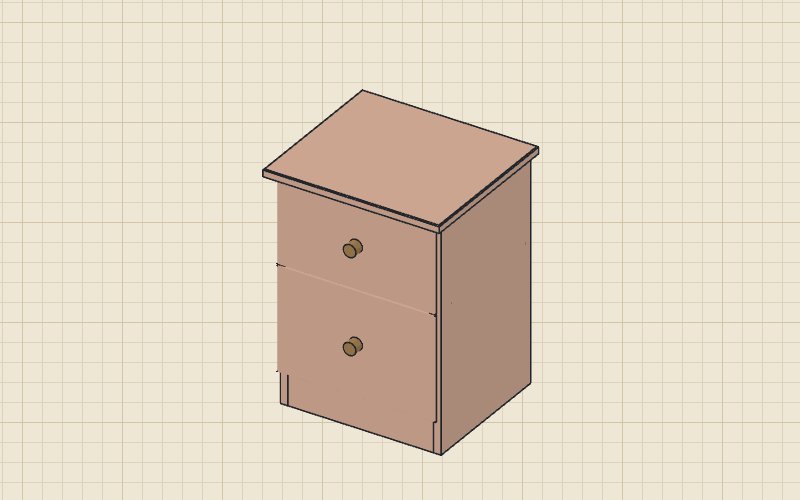
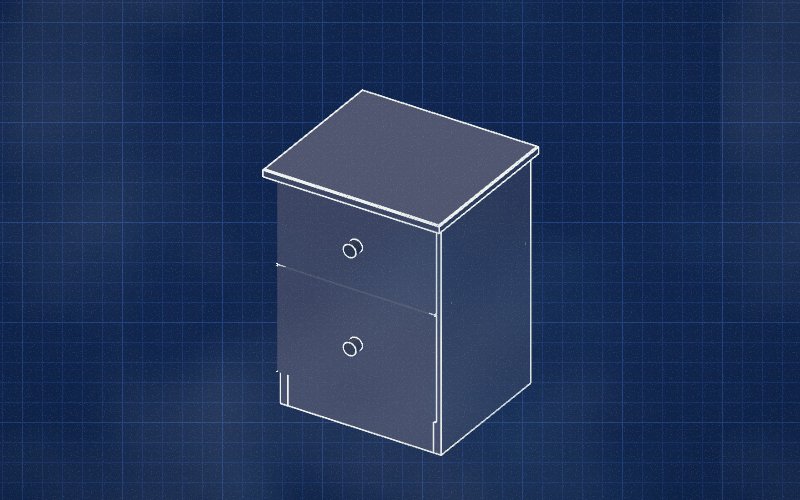
Bedside Cabinet
17.7 × 16.0 × 23.6 in (450 × 406 × 600 mm)
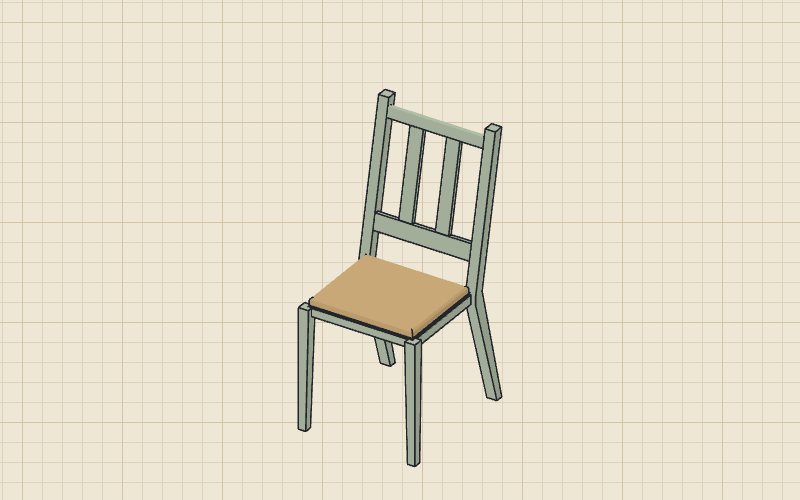
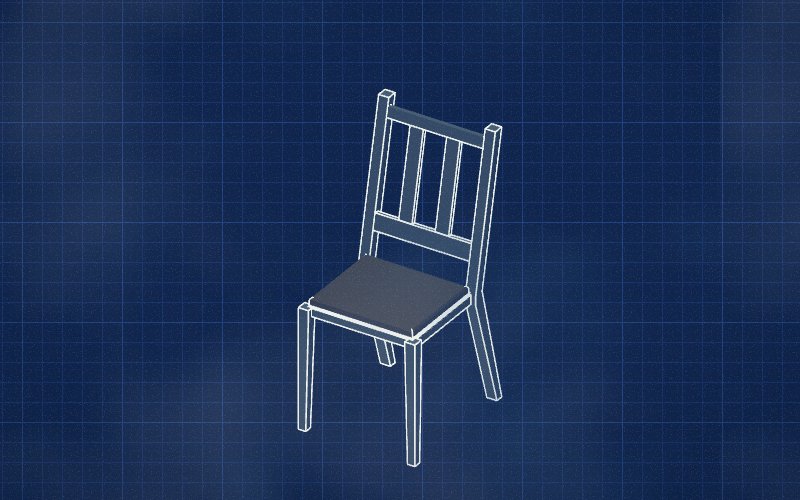
Dining Chair
17.3 × 20.4 × 39.4 in (440 × 517 × 1000 mm)
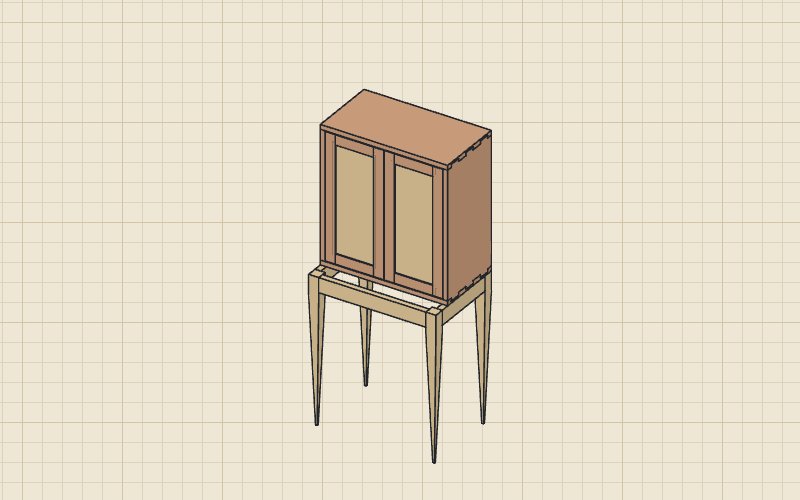
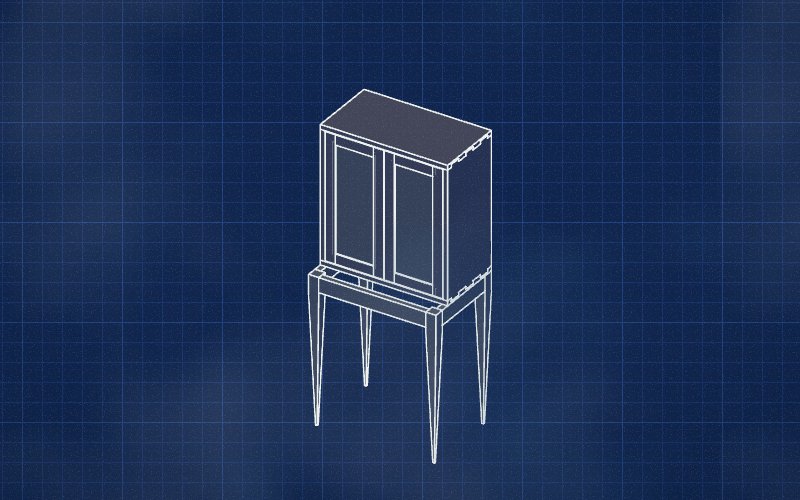
Studio Cabinet on Stand
18.9 × 13.0 × 42.5 in (480 × 330 × 1080 mm)
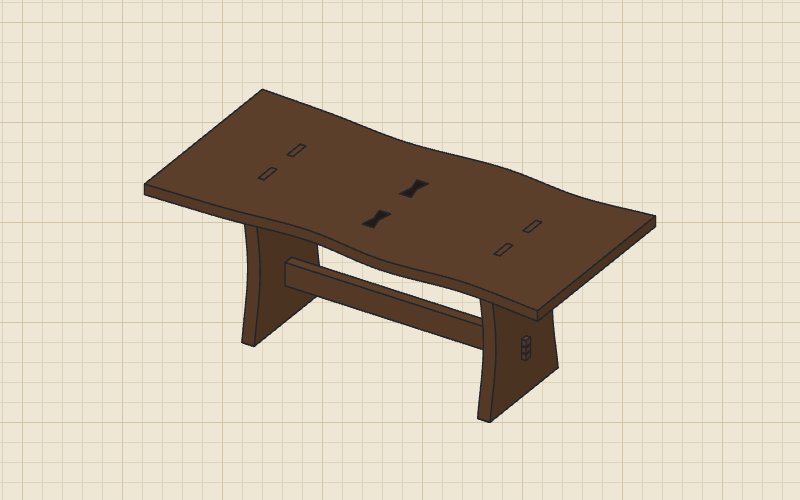
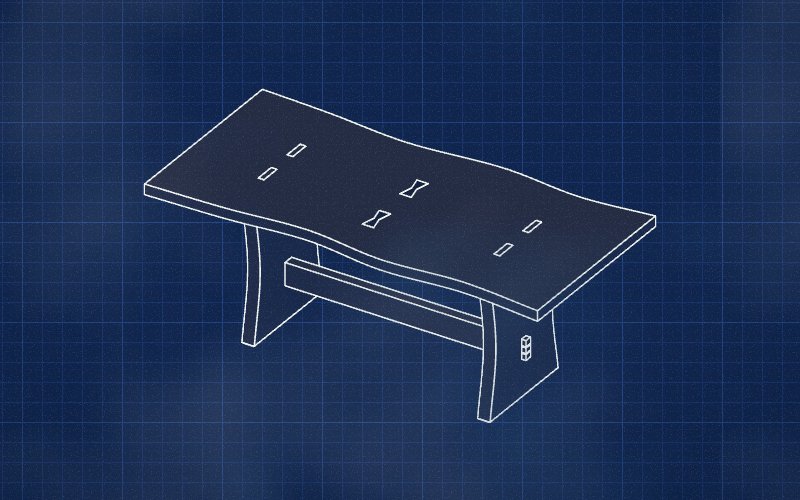
Studio Slab Dining Table
74.8 × 35.4 × 29.1 in (1900 × 900 × 740 mm)