


Overview
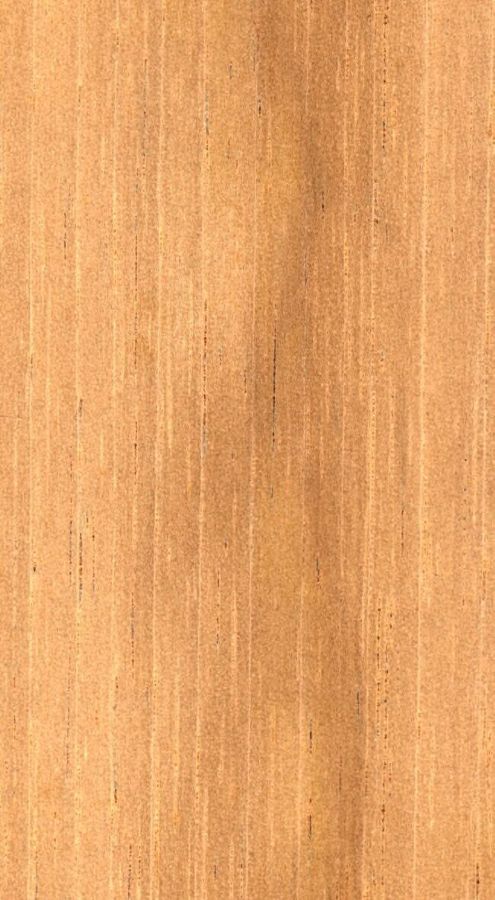
Spanish cedar (Cedrela odorata) is not a cedar at all but a relative of mahogany, a light pinkish to reddish brown wood with a strong, lingering cedar scent. It is the traditional wood for cigar humidors and flamenco and classical guitar necks, and it works like a dream. Pick it when you want something light, fragrant and easy.
Pros
- Easy to work with hand and machine tools, and lightweight (Janka 600 lbf, about 470 kg/m3).
- Rated durable to moderately durable and resistant to termites, according to Wood Database.
- The distinct, lingering cedar scent suits humidors, chests and drawer linings.
- Plantation supply exists and availability is generally adequate.
- Low to moderate price for an imported wood.
Cons
- Soft, so it dents and leaves fuzzy surfaces unless cutters are sharp; extra sanding may be needed.
- Gum and oil pockets can ooze, clog saw blades and interfere with finishing.
- Wood Database reports the dust as a respiratory irritant.
- Bland grain and figure.
- A Vulnerable species on the IUCN Red List and CITES-listed, so legal paperwork matters.
Variants and subspecies
- Cedrela odorata: the principal commercial species, also sold as cedro.
- Other Cedrela species are traded under the same names; the CITES listing covers the whole genus.
- Plantation vs natural-forest stock: the better-documented purchase is plantation-grown, with paperwork.
- Look-alikes: Honduran mahogany and African mahogany (khaya) are botanical relatives but denser and darker. Western red cedar (Western red cedar) is a true conifer with a different scent.
Working and finishing
Cut with sharp tools and sand through the grits; gum pockets may need scraping or solvent wiping before finishing. It glues and nails well and turns cleanly. Seal oily or resinous patches with dewaxed shellac before a film finish. Where the scent is the point, leave linings unfinished.
Staining and finishing colour
Takes stain acceptably, but the natural pink-brown is the attraction and darkens with age. Gum pockets can show through a stain as streaks, so wipe and test on offcuts. Humidor interiors are left unfinished.
Sustainability and handling
CITES: Cedrela spp. are in Appendix II for the Neotropical populations (logs, lumber, veneer, plywood; APHIS CITES Timber Manual, checked 2026-09-30). Wood Database also records Appendix III listings by several range countries (Brazil, Bolivia, Colombia, Guatemala, Peru). IUCN: Vulnerable, with a population decline above 20% over three generations. FSC availability is not verified here; ask for chain-of-custody paperwork. The US Lacey Act makes it unlawful to trade wood taken or exported in breach of the source country's laws (fws.gov/law/lacey-act), so buy from dealers who can name the country and species. If a piece will be exported to or sold in the EU, Regulation (EU) 2023/1115 (the EUDR) requires due-diligence evidence that wood products are deforestation-free and legally produced; check its current application date with your buyer.
Ethical call: acceptable when plantation-grown with CITES paperwork; avoid unverified wild-origin lumber. Western red cedar or Eastern red cedar are substitutes for aromatic chests. Health: the dust is a respiratory irritant per Wood Database. The US National Cancer Institute reports strong, consistent associations between wood-dust exposure and cancers of the nasal cavity and sinuses, so use extraction and a respirator when sanding.
Popular projects
Cigar humidors and boxes, drawer and chest linings, guitars (Wood Database mentions flamenco and classical), cabinetry and doors, boat parts, and light furniture where scent and low weight count.
Buying notes
Sold rough or surfaced in 4/4 and thicker, with thin 1/4 in stock for liners and craft work. Two retailers list 4/4 at $11.99 and $13.00 a board foot. Ask whether it is plantation-grown and for the species name. The label 'cedar' is also used loosely: confirm it is Cedrela if you need the humidor-grade wood.
Typical projects
- humidors
- guitar necks and linings
- cigar boxes
- drawer and chest linings
- cabinetry
- boatbuilding
Sources
- www.wood-database.com/spanish-cedar
- www.bellforestproducts.com/exotic-lumber/prices
- www.aphis.usda.gov/sites/default/files/cites.pdf
- www.fws.gov/sites/default/files/documents/CoP19%20timber%20outcomes...
- www.fws.gov/sites/default/files/documents/2026-01/ole-public-bullet...
- www.fws.gov/law/lacey-act
- eur-lex.europa.eu/eli/reg/2023/1115/oj
Researched 2026-09-30. Prices, conservation status and CITES listings on this page are indicative and were checked on that date. They change: confirm them with your supplier, and with the relevant authority before importing or exporting.