

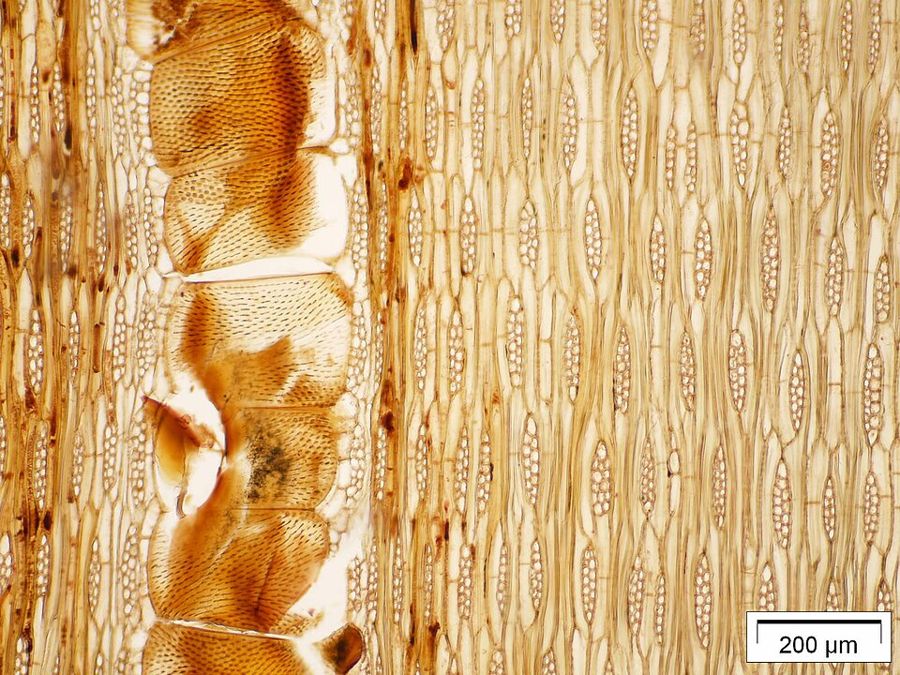

Overview
Brazilian rosewood (Dalbergia nigra) is the historic standard for fine furniture, guitars and piano cases: chocolate to purplish brown with black streaks that can form 'spider-webbing' or 'landscape' patterns. It is stable, easy to work, and strongly resonant. It is also the most tightly protected timber in this guide, and you should rarely if ever buy it new.
Pros
- Distinctive colour and figure; the black streaking can look like landscape patterns.
- Wood Database calls it easy to work with hand and machine tools, and it turns and finishes well.
- Very durable and insect-resistant.
- Janka 2,790 lbf, about 835 kg/m3; strong yet stable, with excellent acoustic reputation.
- Old guitars and furniture offer a legal route to the look.
Cons
- CITES Appendix I, the most restrictive category, which includes finished products.
- Vulnerable on the IUCN Red List.
- Wood Database says it is likely very expensive and from questionable sources; legal sales are generally limited to reclaimed or pre-existing stock.
- Oily, and can be difficult to glue.
- Reported as a sensitizer, with eye and skin irritation.
Variants and subspecies
- Dalbergia nigra: the only species sold under this name; its Appendix I listing supersedes the genus-wide Appendix II for Dalbergia.
- Reclaimed or pre-convention stock: the only legal supply, such as old furniture or timber predating the listing, which usually needs paperwork.
- Look-alikes: Bolivian rosewood (Bolivian rosewood (pau ferro), Machaerium), Indian rosewood (East Indian rosewood), sonokeling (Sonokeling) and cocobolo (Cocobolo) are used as substitutes.
Working and finishing
Use sharp tools and light cuts; it works easily and turns well. For gluing, wipe surfaces with solvent and test on scraps. Oil, shellac or wax finishes show it best. Wear a respirator.
Staining and finishing colour
Stain is not used; clear finishes preserve the natural chocolate-and-purple tones and the black streaks.
Sustainability and handling
CITES: Dalbergia nigra is in Appendix I, covering all parts including finished products, the only Dalbergia listing that supersedes the genus-wide Appendix II (APHIS CITES Timber Manual; Wood Database; checked 2026-09-30). IUCN: Vulnerable. The US Lacey Act makes it unlawful to trade wood taken or exported in breach of the source country's laws (fws.gov/law/lacey-act), so buy from dealers who can name the country and species.
Ethical call: a poor choice for new work, and in practice a legal minefield. Do not buy it from a dealer who cannot show lawful, pre-convention origin. Use Bolivian rosewood (pau ferro) (not CITES-listed), or East Indian rosewood / Sonokeling with their Appendix II paperwork. Health: reported as a sensitizer. The US National Cancer Institute reports strong, consistent associations between wood-dust exposure and cancers of the nasal cavity and sinuses, so use extraction and a respirator when sanding.
Popular projects
Historic furniture and veneer, piano cases, acoustic guitar backs and sides, xylophone and marimba bars, and turned objects, all from existing stock.
Buying notes
There is no ordinary retail market. Prices in the front matter are an estimate, not a quote. If you inherit or are offered old stock, get provenance documents, check the CITES rules for your country, and assume cross-border movement needs permits.
Typical projects
- guitars and musical instruments
- fine furniture (historic)
- veneer
- turned objects
- cabinetry
Sources
Researched 2026-09-30. Prices, conservation status and CITES listings on this page are indicative and were checked on that date. They change: confirm them with your supplier, and with the relevant authority before importing or exporting.