

Shaker
History
This furniture was made by and for the United Society of Believers in Christ's Second Appearing, a celibate communal sect whose New England, New York, Ohio and Kentucky villages — Mount Lebanon, Hancock, Canterbury, Sabbathday Lake, Pleasant Hill among them — built almost everything they used. The classic body of work dates roughly 1820 to 1850, within a broader production span of about 1790 to 1870, though the Shakers kept making chairs for outside sale well into the 20th century, with Mount Lebanon's chair works even cataloguing numbered sizes for its rocking chairs.
The forms grew out of a belief that making a thing well was itself an act of devotion, and that appearance should follow function. That conviction, rather than any imported design ideas, is what gives the style its consistency: it shares its materials and basic joinery with the ordinary country furniture of its time and region, but is more refined in proportion and far more disciplined in its restraint than the rural work made around it.
Elements
Shaker pieces read as tall, narrow and light, with every part thinned to only what its load requires — slim legs, posts and rails, drawers graduated in depth, built-in cupboards and chests running floor to ceiling. Tables and stands stand on square legs tapered on their inner faces or on turned legs with a square pommel easing into a long taper; tripod stands carry a turned pillar. Chairs are ladder-backs with turned posts, gently curved slats and woven rush or tape seats, many fitted with wooden-ball "tilters" in their back posts so a sitter can lean back without scarring the floor.
There is deliberately no carving, inlay, veneer or applied moulding anywhere in the style; the ornament is entirely proportion, turned knobs, and the quiet contrast of woods such as cherry against figured maple. Surfaces were left in milk paint or red stain, or finished clear with varnish or oil. The primary woods are eastern white pine and hard maple, with cherry, birch, butternut, walnut, poplar, hickory and ash also in use, and construction leans on half-blind dovetails at drawer fronts with through dovetails at the backs, pinned mortise-and-tenon frames, and — in the Shakers' distinctive oval boxes — a steam-bent maple band lapped in swallowtail fingers and fastened with copper tacks, entirely without glue.
Designs


Kitchen Collections
78.0 × 32.6 × 152.0 in (1981 × 828 × 3861 mm)
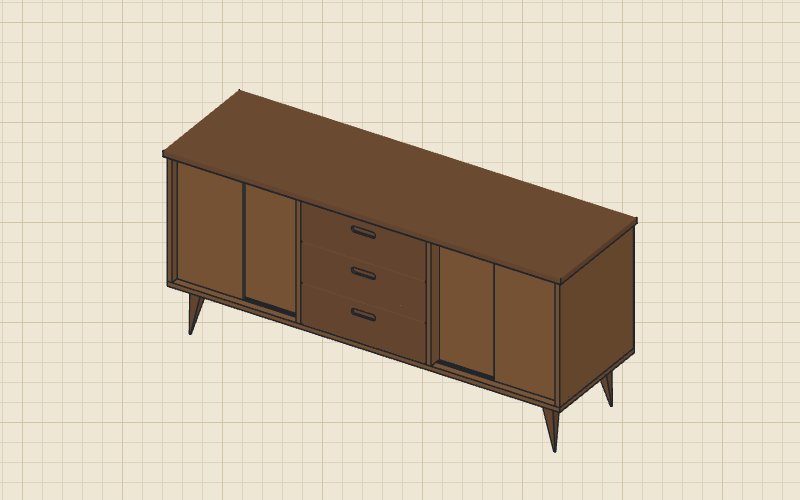
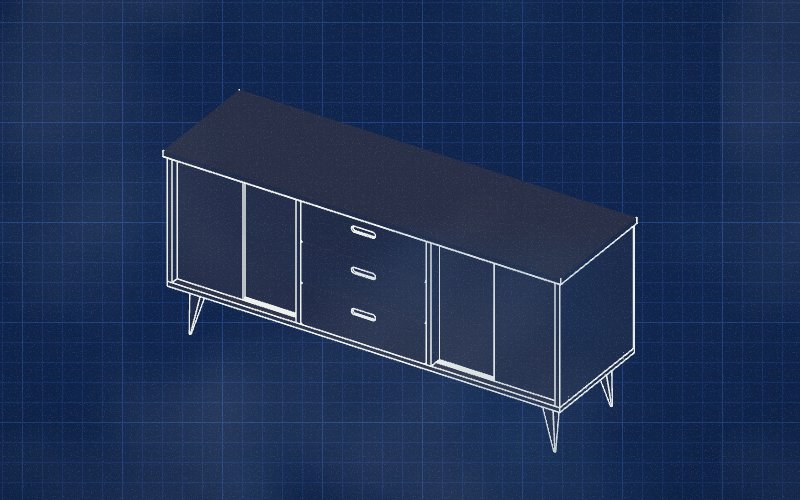
Mid-Century Walnut Credenza
59.8 × 18.1 × 27.6 in (1520 × 460 × 700 mm)
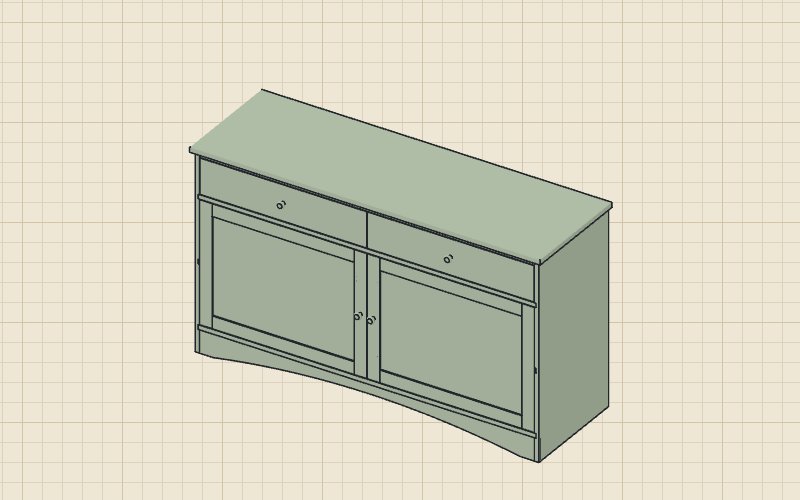
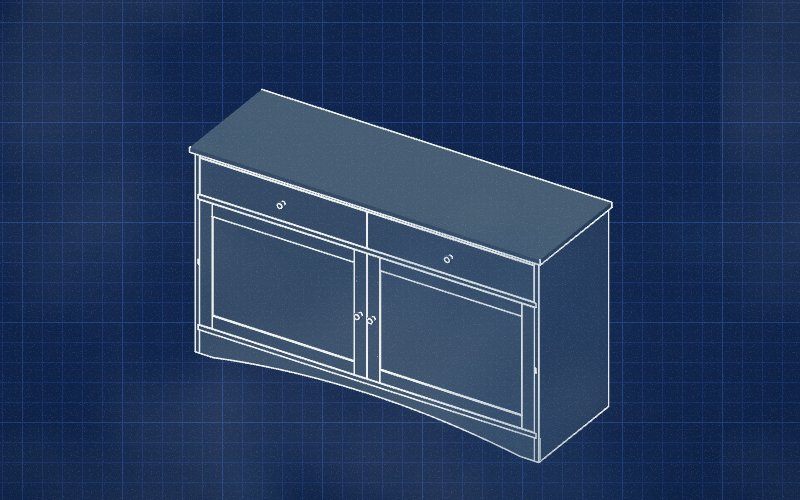
Neo-Shaker Cherry Sideboard
60.2 × 19.9 × 34.6 in (1530 × 506 × 880 mm)
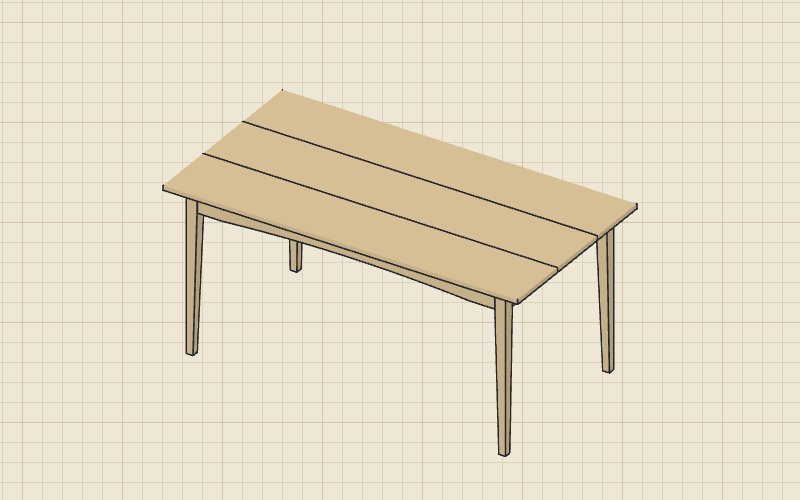
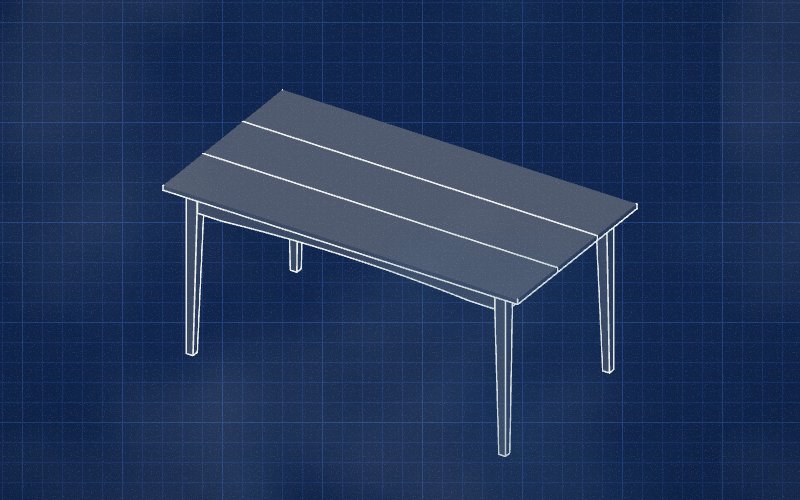
Neo-Shaker Tapered-Leg Table
63.0 × 33.5 × 29.1 in (1600 × 850 × 740 mm)
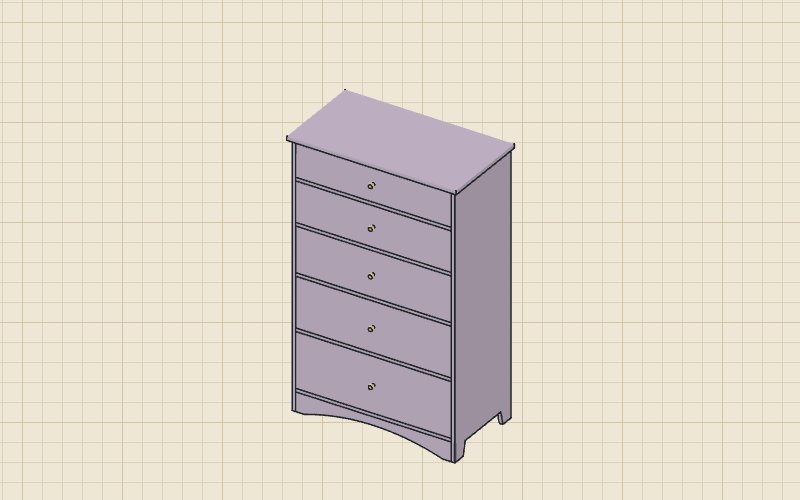

Shaker Chest of Drawers
36.1 × 20.0 × 57.5 in (916 × 508 × 1460 mm)
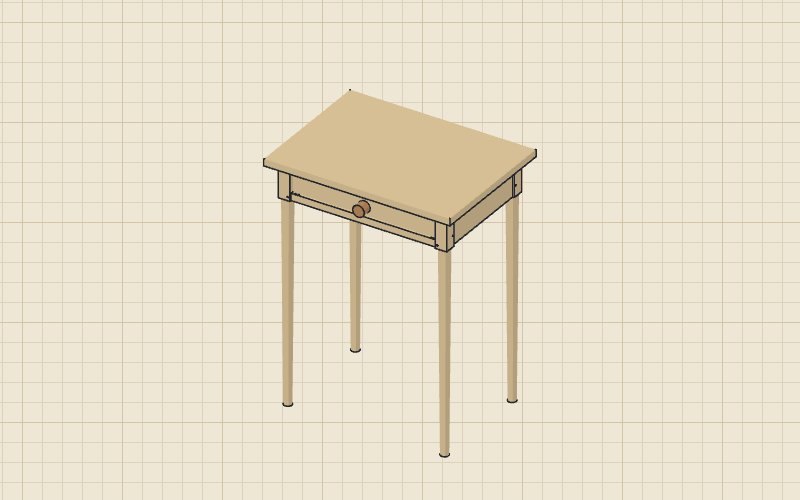
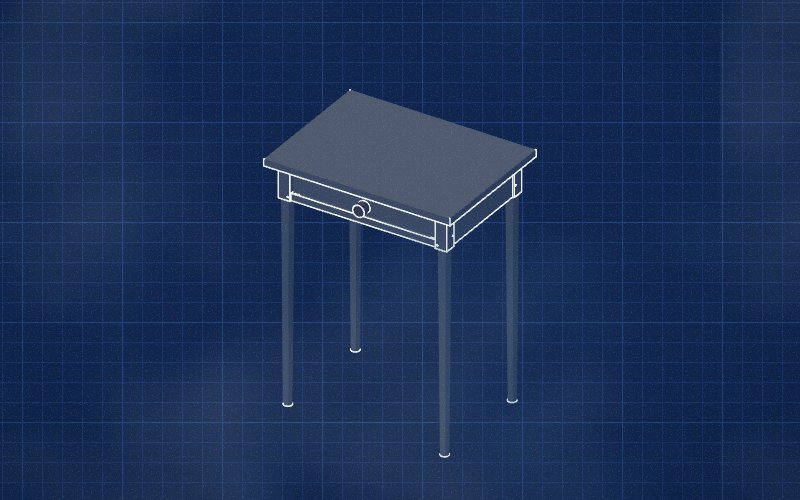
Shaker Side Table
20.5 × 15.0 × 26.8 in (520 × 380 × 680 mm)
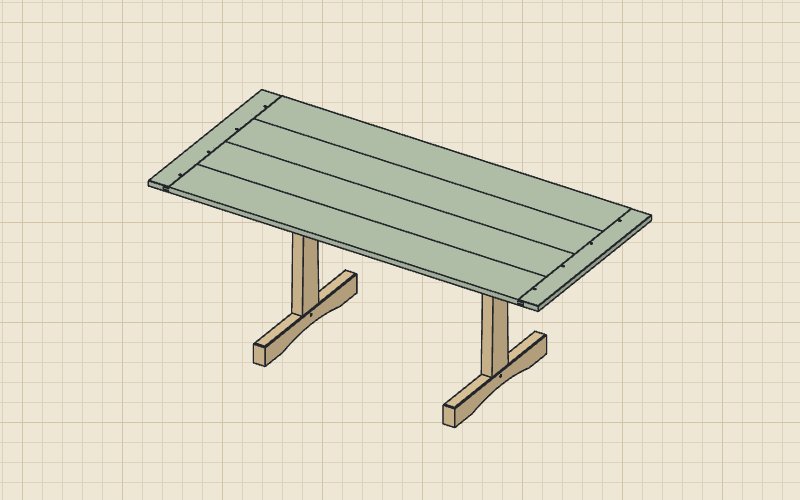
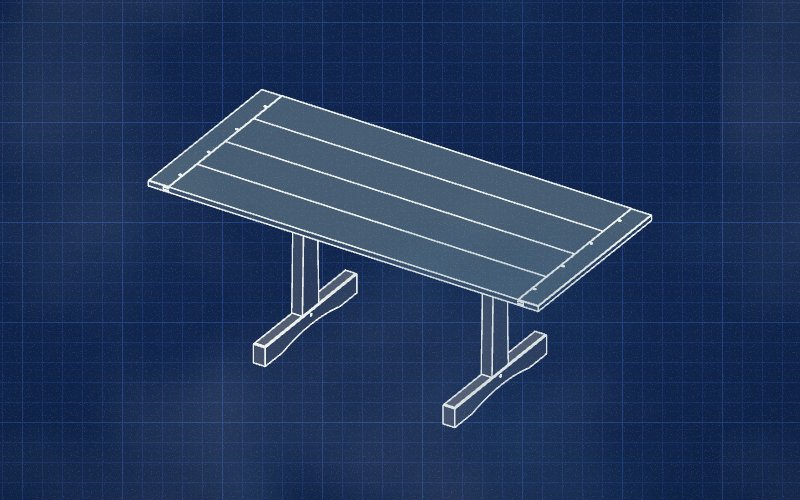
Shaker Trestle Dining Table
72.0 × 33.1 × 29.1 in (1830 × 840 × 740 mm)
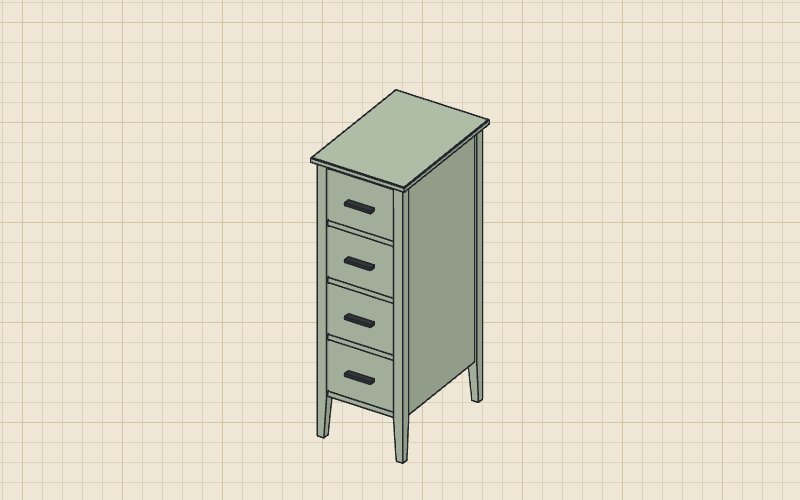

Vertical Filing Cabinet
18.1 × 26.0 × 53.0 in (460 × 660 × 1347 mm)
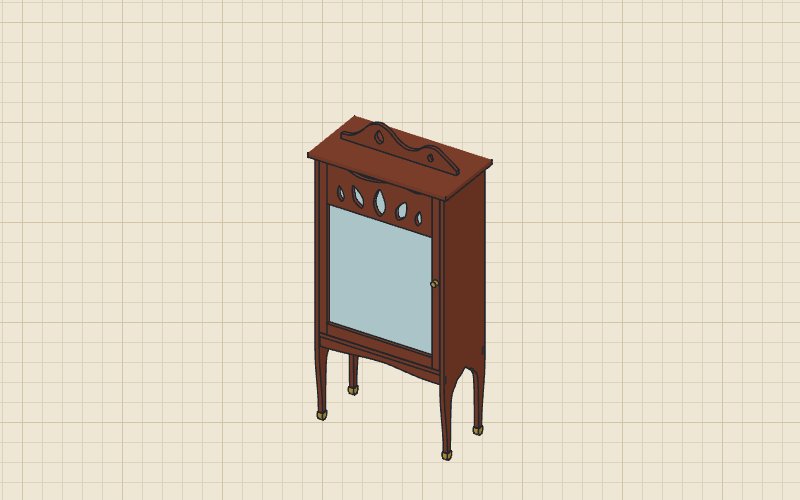
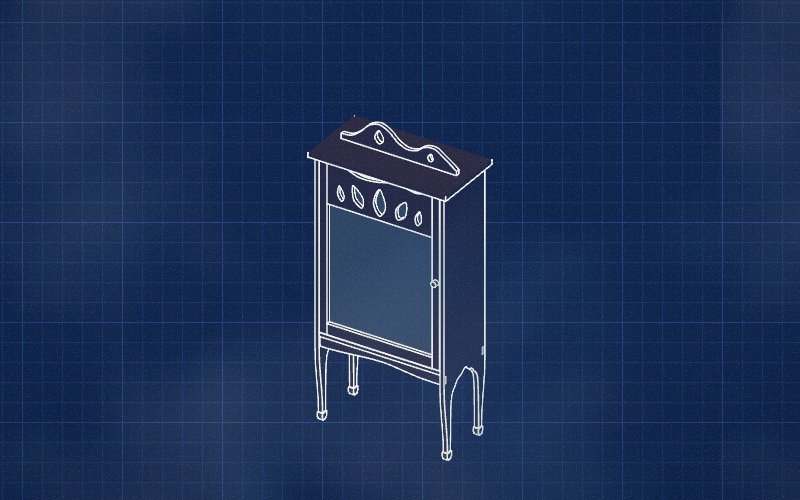
Whiplash Crest Vitrine
32.0 × 17.0 × 67.3 in (812 × 432 × 1710 mm)
Hardware for this style
Hinges, pulls, fasteners and other hardware that guides to this style name.
- Hinges
- Butt hinge
- Drawer slides
- Wooden drawer runner
- Pulls and escutcheons
- Knob
- Tabletop fasteners
- Tabletop button